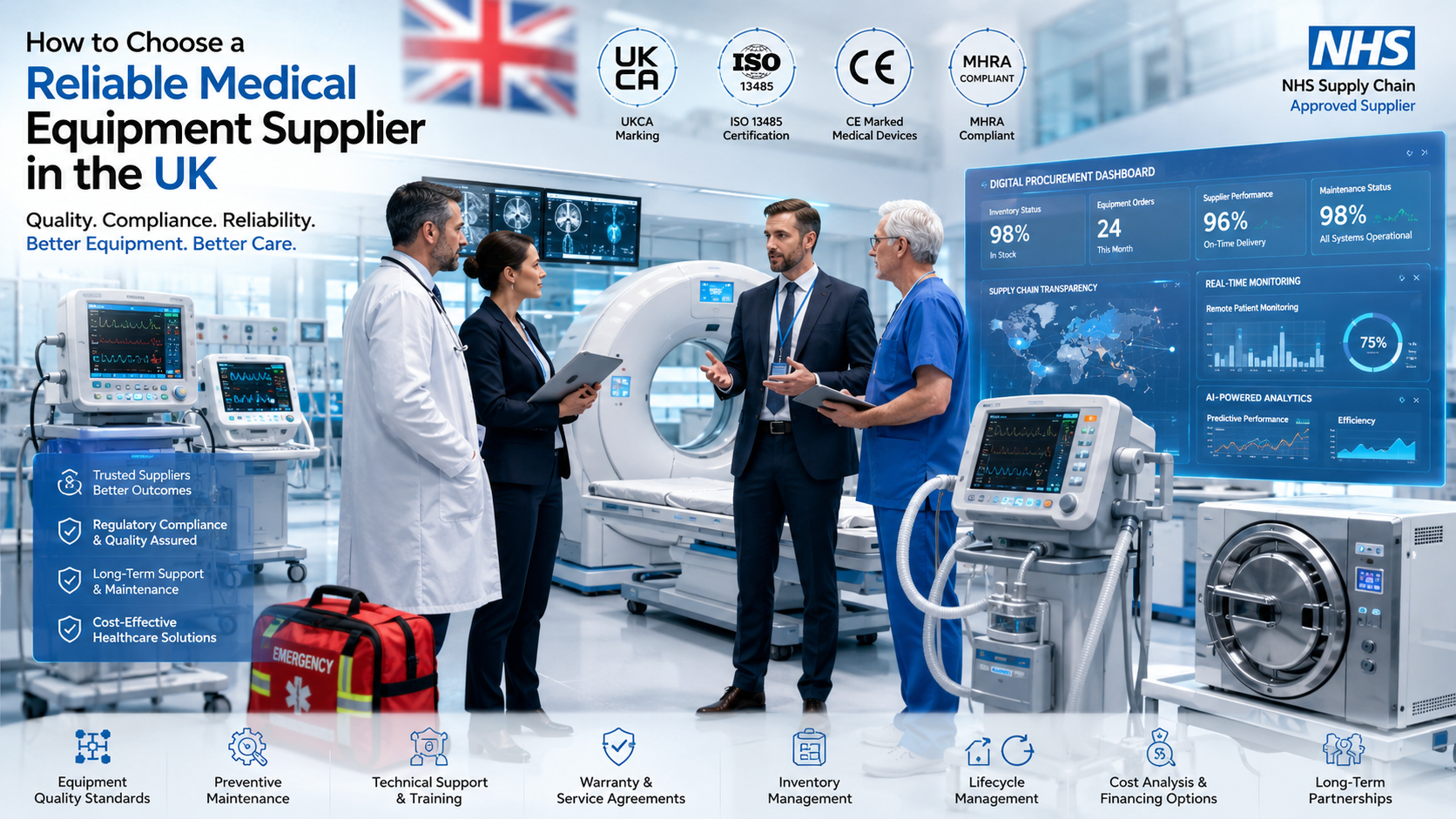
How to Choose a Reliable Medical Equipment Supplier in the UK
How to Choose a Reliable Medical Equipment Supplier in the UK
Choosing the right Medical Equipment Supplier is one of the most important decisions any healthcare organization can make. Whether you are managing a private clinic, NHS hospital, diagnostic laboratory, dental practice, care home, or specialist medical center, the quality of your supplier directly affects patient safety, operational efficiency, and long-term costs.
In today’s healthcare environment, equipment is no longer limited to basic tools and machines. Modern healthcare facilities rely heavily on advanced Healthcare Technology Solutions, intelligent monitoring systems, connected diagnostics, and automated workflows.
From Diagnostic Imaging Equipment and Patient Monitoring Systems to Sterilization Equipment and Emergency Response Equipment, every device must perform accurately and consistently.
In the UK, healthcare providers must also navigate strict regulations and procurement standards. A trusted supplier should understand Regulatory Compliance, follow Compliance with MHRA Regulations, provide UKCA Marking, and supply properly certified CE Marked Medical Devices where applicable.
Beyond compliance, healthcare organizations also need dependable service, transparent pricing, rapid delivery, and ongoing technical support.
Many healthcare facilities make the mistake of choosing suppliers based solely on price. While affordability matters, the cheapest option can often lead to equipment downtime, hidden servicing costs, delayed deliveries, or poor support.
A reliable supplier focuses on long-term value by offering Cost-Effective Healthcare Solutions, strong warranties, responsive maintenance teams, and strategic procurement guidance.
Healthcare procurement has also evolved significantly in recent years. Hospitals now prioritize Digital Healthcare Integration, Remote Patient Monitoring, and Smart Healthcare Devices to improve patient care and streamline operations.
This shift means suppliers must provide not only equipment but also technology expertise, training, integration support, and lifecycle management services.
Another major consideration is operational continuity. Imagine a hospital ICU facing equipment failure during peak patient demand. Without fast Equipment Maintenance Services, skilled engineers, or a responsive Technical Support Team, patient care can suffer.
This is why modern procurement teams evaluate suppliers based on reliability, service responsiveness, and infrastructure support rather than product catalogs alone.
The UK healthcare market is highly competitive, which gives buyers many options. However, not every supplier offers the same standards of quality, transparency, and accountability.
Understanding how to evaluate suppliers properly can help healthcare organizations avoid procurement risks, improve clinical outcomes, and build sustainable partnerships.
This comprehensive guide explains everything healthcare providers need to know about choosing a reliable medical equipment supplier in the UK.
We will cover procurement planning, compliance requirements, maintenance services, supplier evaluation, cost analysis, logistics, sustainability, digital integration, and long-term partnership strategies.
By the end of this article, you will have a practical framework for identifying trustworthy suppliers who can support your healthcare facility’s growth, operational efficiency, and patient care objectives for years to come.

Understanding Your Healthcare Facility’s Procurement Needs
Before contacting any supplier, healthcare organizations must first understand their own operational and clinical requirements. Effective Healthcare Facility Procurement begins with a clear assessment of equipment needs, departmental workflows, patient volume, and future expansion plans.
A small private clinic may only require basic examination tools, portable monitors, and limited imaging systems. In contrast, a large hospital might need advanced Diagnostic Imaging Equipment, integrated surgical systems, ICU monitoring devices, and hospital-wide Inventory Management Systems.
The most successful procurement teams start by creating a structured Healthcare Procurement Strategy. This includes identifying:
- Clinical requirements
- Budget limitations
- Maintenance expectations
- Installation timelines
- Staff training needs
- Technology integration requirements
- Long-term operational goals
Healthcare facilities should also conduct a full Procurement Cost Analysis before making major purchasing decisions. This process helps organizations understand the total cost of ownership instead of focusing only on upfront pricing.
For example, a low-cost imaging machine may appear attractive initially. However, if the supplier lacks reliable maintenance support, calibration services, or spare part availability, operational costs may increase significantly over time.
Modern healthcare facilities must also consider Healthcare Equipment Compatibility. Equipment should integrate smoothly with existing hospital systems, software platforms, patient databases, and diagnostic tools. Poor compatibility often leads to workflow disruptions and expensive upgrades later.
Another important factor is future scalability. As healthcare organizations expand, they need suppliers capable of supporting growth through additional equipment, upgrades, and evolving technology solutions. Reliable suppliers help clients plan for long-term Healthcare Infrastructure Planning instead of focusing only on immediate sales.
Healthcare facilities should also evaluate whether they require specialized support areas such as:
- Medical Consumables Supply
- Remote Patient Monitoring
- Digital Healthcare Integration
- Clinical Workflow Optimization
- Smart Healthcare Devices
For NHS organizations, understanding the NHS Supply Chain structure is especially important. Suppliers familiar with NHS procurement procedures can help streamline purchasing processes and improve procurement efficiency.
A supplier that understands your clinical environment can recommend tailored solutions rather than generic products. This consultative approach often leads to better equipment performance, improved patient care, and lower operational risks.
Evaluating Compliance, Certifications, and Quality Standards
One of the most critical steps in choosing a supplier is verifying regulatory compliance and quality certifications. Healthcare equipment directly affects patient safety, making compliance non-negotiable.
A reliable supplier should fully understand UK healthcare regulations and demonstrate strong adherence to Medical Device Quality Standards. This includes compliance with:
- UKCA Marking
- CE Marked Medical Devices
- Compliance with MHRA Regulations
- ISO 13485 Certification
- National safety standards
- International quality management systems
The Medicines and Healthcare products Regulatory Agency (MHRA) plays a major role in ensuring medical devices meet safety and performance requirements in the UK. Suppliers who fail to meet MHRA standards may expose healthcare facilities to legal risks, operational issues, and patient safety concerns.
One of the strongest indicators of reliability is Supplier Accreditation. Accredited suppliers follow recognized industry standards and undergo regular audits to maintain compliance. This helps healthcare organizations reduce procurement risks and improve trust in their supply chain.
Healthcare facilities should also verify Product Traceability processes. Reliable suppliers maintain detailed records of manufacturing, shipping, servicing, and installation. Traceability becomes especially important during recalls, maintenance checks, or equipment investigations.
Another key consideration is equipment testing and calibration. Trusted suppliers provide ongoing Calibration and Testing Services to ensure devices continue operating accurately after installation. This is particularly essential for imaging systems, diagnostic devices, surgical equipment, and patient monitoring tools.
Healthcare organizations should also conduct regular Healthcare Equipment Audits to evaluate equipment performance, maintenance status, and compliance levels. Suppliers who support audits demonstrate transparency and accountability.
Infection prevention is another critical area. Equipment suppliers should offer effective Infection Control Solutions and sterilization systems that meet hospital hygiene requirements. This includes advanced Sterilization Equipment, antimicrobial materials, and contamination prevention technologies.
Real-world healthcare environments are unpredictable. Devices must function reliably during emergencies and high-pressure clinical situations. Therefore, procurement teams should prioritize Clinical Equipment Reliability over flashy marketing claims.
A supplier’s reputation can reveal a great deal about service quality and compliance standards. Conducting a detailed Vendor Reputation Assessment helps organizations identify trustworthy suppliers with proven track records in the UK healthcare sector.
When evaluating vendors, healthcare buyers should consider:
- Industry experience
- Client testimonials
- NHS partnerships
- Response times
- Product certifications
- Regulatory history
- Technical expertise
- Complaint resolution practices
Reliable suppliers are transparent about compliance documentation and willingly provide certifications, audit reports, and service records when requested.
Assessing Technical Support, Maintenance, and After-Sales Services
Purchasing equipment is only the beginning of the relationship. The long-term value of any supplier depends heavily on the quality of support provided after installation.
Healthcare facilities operate continuously, often 24/7. Equipment downtime can delay treatments, disrupt surgeries, and negatively affect patient outcomes. This is why strong Equipment Maintenance Services are essential.
Reliable suppliers provide structured maintenance programs that include:
- Routine inspections
- Repairs
- Software updates
- Replacement parts
- Emergency servicing
- Performance optimization
One of the most valuable services is Preventive Maintenance. Instead of waiting for equipment to fail, preventive maintenance identifies issues early and reduces unexpected breakdowns. Hospitals that prioritize preventive servicing often experience better operational efficiency and reduced repair costs.
Healthcare organizations should also evaluate the supplier’s Technical Support Team. A responsive support department can significantly reduce downtime during technical emergencies.
The best suppliers provide:
- 24/7 technical assistance
- Remote diagnostics
- On-site engineering support
- Fast response times
- Dedicated account managers
Advanced medical devices often require specialized engineering expertise. Suppliers offering Biomedical Engineering Support can help healthcare facilities maintain complex systems, improve device performance, and optimize equipment lifecycles.
Another major factor is Equipment Lifecycle Management. Medical devices have limited operational lifespans, and suppliers should help organizations plan upgrades, replacements, and disposal strategies.
Good lifecycle management includes:
- Asset tracking
- Usage monitoring
- Maintenance scheduling
- Upgrade planning
- End-of-life replacement strategies
Suppliers should also provide clear Warranty and Service Agreements outlining repair coverage, response times, replacement policies, and maintenance responsibilities. Vague warranty terms can lead to unexpected costs later.
The installation process itself is equally important. Proper Medical Equipment Installation ensures devices are configured safely, calibrated correctly, and integrated into clinical workflows efficiently.
Training is another frequently overlooked area. Even the best equipment can become ineffective if healthcare staff are not trained properly. Reliable suppliers offer comprehensive Staff Training and User Support to ensure safe operation and maximum productivity.
For example, hospitals adopting advanced monitoring systems often require staff training on data interpretation, software integration, and troubleshooting procedures. Suppliers who invest in training help healthcare organizations improve both safety and efficiency.
Strong After-Sales Support also plays a crucial role in long-term supplier relationships. Healthcare providers should choose suppliers who remain engaged after the sale rather than disappearing once payment is completed.
Supply Chain Reliability, Logistics, and Procurement Transparency
The healthcare industry depends heavily on timely deliveries and uninterrupted supply chains. Delays in receiving critical devices or consumables can disrupt patient care and hospital operations.
A dependable supplier should demonstrate strong Supply Chain Transparency and maintain a Reliable Delivery Network capable of handling urgent healthcare demands.
The COVID-19 pandemic highlighted the importance of resilient supply chains. Many healthcare organizations faced shortages of ventilators, PPE, monitors, and diagnostic tools due to supplier limitations. Since then, procurement teams have become far more focused on supplier reliability and inventory stability.
Reliable suppliers maintain strategic inventory systems and diversified sourcing networks to minimize disruptions. They also provide accurate delivery timelines and proactive communication during delays.
Healthcare facilities should also evaluate a supplier’s ability to manage ongoing Medical Consumables Supply. Consumables such as gloves, syringes, tubing, filters, and sterilization materials are essential for daily healthcare operations.
Suppliers offering integrated consumable management services can help healthcare organizations improve inventory efficiency and reduce waste.
Advanced Inventory Management Systems are another important feature. Modern suppliers use digital tracking systems to monitor stock levels, automate reordering, and improve supply chain visibility.
For hospitals handling high patient volumes, efficient inventory management reduces shortages, improves operational planning, and supports better clinical outcomes.
Healthcare organizations should also prioritize Healthcare Risk Management when selecting suppliers. This includes evaluating potential risks related to:
- Supply shortages
- Equipment recalls
- Cybersecurity vulnerabilities
- Compliance failures
- Delivery delays
- Product quality issues
A supplier’s logistics capabilities directly affect hospital efficiency. Reliable delivery systems ensure emergency departments, ICUs, and operating theatres receive equipment and consumables when needed.
Healthcare facilities should also consider suppliers offering flexible procurement models and Medical Equipment Financing Options. Leasing programs, installment plans, and managed service contracts can help organizations manage budgets more effectively.
Long-term partnerships are often more beneficial than transactional purchasing relationships. Building Long-Term Supplier Partnerships creates stronger collaboration, better pricing opportunities, improved support, and more reliable service.
Trusted suppliers often act as strategic advisors by helping healthcare organizations improve workflows, reduce operational costs, and adopt emerging technologies.
Technology Integration, Sustainability, and Future-Ready Healthcare Solutions
Healthcare technology is evolving rapidly. Modern suppliers must provide solutions that support digital transformation, patient-centered care, and operational efficiency.
Today’s healthcare facilities increasingly rely on:
- Smart Healthcare Devices
- Remote Patient Monitoring
- Connected diagnostic systems
- AI-powered analytics
- Cloud-based healthcare platforms
- Automated workflows
This shift makes Digital Healthcare Integration a critical supplier capability. Equipment should integrate seamlessly with electronic health records, monitoring systems, diagnostic software, and hospital communication platforms.
For example, integrated Patient Monitoring Systems can automatically transfer patient data to centralized dashboards, helping clinicians respond faster and make informed decisions.
Healthcare organizations also seek suppliers capable of improving Clinical Workflow Optimization. Efficient workflows reduce delays, improve patient experiences, and increase staff productivity.
Suppliers that understand workflow design can recommend technologies that simplify operations rather than creating unnecessary complexity.
Sustainability has also become a major priority across the UK healthcare sector. Hospitals and clinics increasingly prefer Sustainable Medical Equipment Solutions that reduce waste, lower energy consumption, and support environmental goals.
Environmentally responsible suppliers may offer:
- Energy-efficient equipment
- Recyclable packaging
- Refurbishment programs
- Reduced carbon logistics
- Eco-friendly manufacturing practices
Sustainability not only benefits the environment but can also reduce long-term operating costs.
Healthcare facilities should also evaluate suppliers based on Vendor Performance Evaluation metrics. Regular performance reviews help organizations assess:
- Delivery reliability
- Equipment quality
- Service responsiveness
- Maintenance efficiency
- Compliance consistency
- Customer satisfaction
The future of healthcare will continue moving toward connected care models, remote diagnostics, and intelligent automation. Suppliers capable of supporting innovation are more valuable than vendors focused only on short-term sales.
Healthcare organizations investing in future-ready solutions gain several advantages:
- Better patient outcomes
- Reduced operational costs
- Faster clinical decision-making
- Improved resource management
- Enhanced patient monitoring capabilities
Suppliers that actively invest in innovation and digital healthcare trends are often better equipped to support healthcare providers over the long term.
Additional Factors Often Overlooked During Supplier Selection
While many healthcare organizations focus on pricing and product quality, several overlooked factors can significantly affect supplier performance.
Communication and Responsiveness
Clear communication is essential during procurement, installation, servicing, and emergency support situations. Suppliers who respond quickly and communicate transparently help healthcare facilities avoid operational confusion.
Emergency Preparedness
Reliable suppliers should have contingency plans for emergency situations, including equipment shortages, transportation disruptions, and technical failures.
This is especially important for critical care devices and Emergency Response Equipment.
On-Site Demonstrations and Trials
Many reputable suppliers offer product demonstrations, pilot programs, or temporary installations before final purchasing decisions. These trials help healthcare teams evaluate usability, compatibility, and performance in real-world clinical settings.
Cybersecurity and Data Protection
As healthcare technology becomes more connected, cybersecurity risks are increasing. Suppliers providing connected monitoring systems or digital platforms should implement strong security measures to protect patient data.
Local Service Coverage
Suppliers with local engineering teams often provide faster response times and more reliable servicing support across the UK.
Choosing a reliable Medical Equipment Supplier in the UK requires far more than comparing prices or reviewing product catalogs. Healthcare providers must evaluate suppliers based on quality standards, regulatory compliance, technical expertise, logistics capabilities, service reliability, and long-term strategic value.
The best suppliers understand the real challenges healthcare organizations face every day. They provide not only equipment but also guidance, training, maintenance, and ongoing support that improve operational efficiency and patient care.
By prioritizing factors such as Regulatory Compliance, ISO 13485 Certification, Clinical Equipment Reliability, Preventive Maintenance, Supply Chain Transparency, and Digital Healthcare Integration, healthcare organizations can reduce procurement risks and build stronger, more sustainable healthcare systems.
Reliable suppliers become long-term partners in healthcare success. They help hospitals and clinics navigate evolving technologies, maintain compliance standards, optimize workflows, and deliver safer patient care.
Before making your next procurement decision, take the time to conduct thorough evaluations, review certifications, assess support capabilities, and analyze long-term value rather than focusing only on upfront costs.
In an industry where lives depend on reliable performance, choosing the right supplier is not simply a purchasing decision — it is an investment in patient safety, operational excellence, and the future of healthcare.