
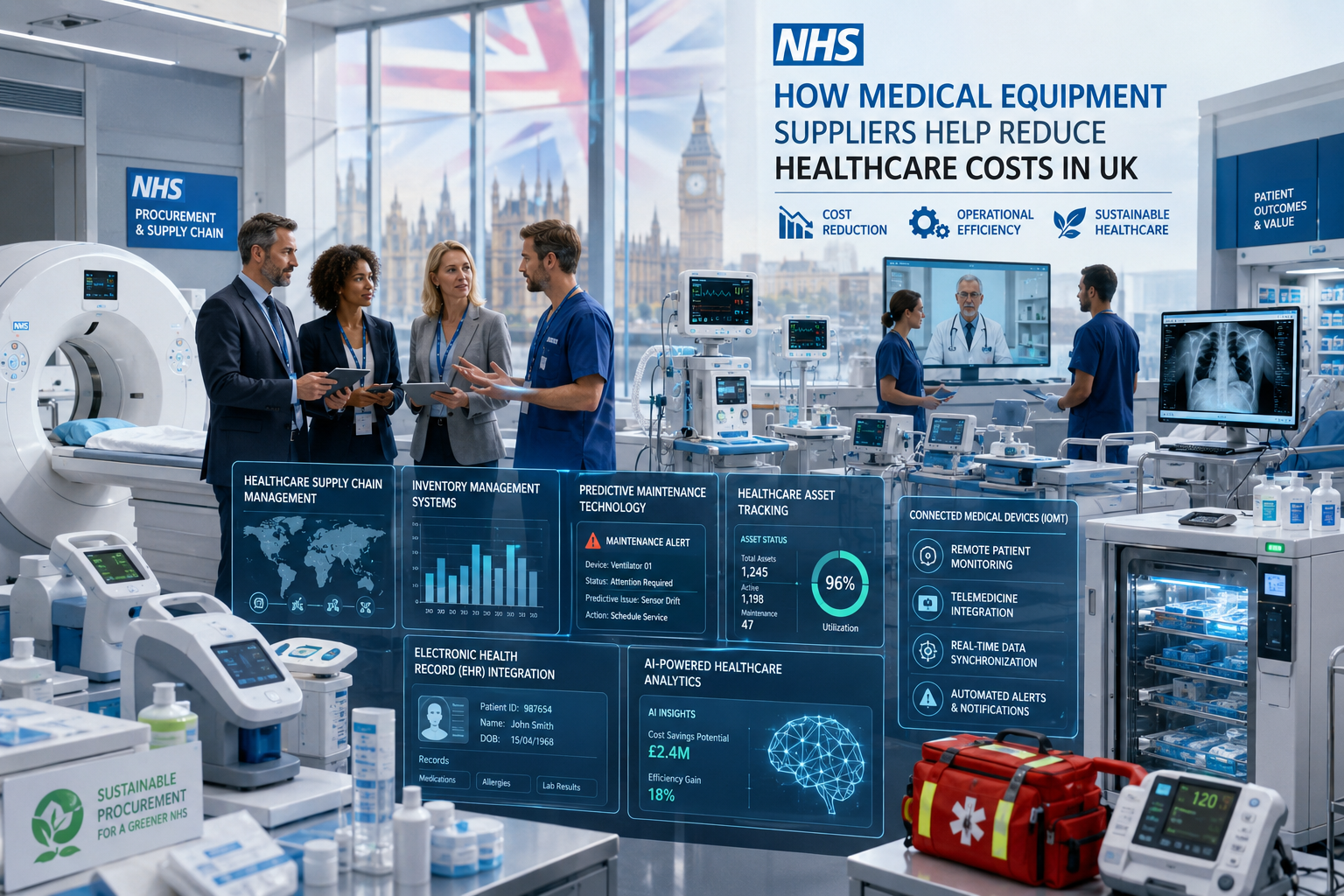
How Medical Equipment Suppliers Help Reduce Healthcare Costs In UK
How Medical Equipment Suppliers Help Reduce Healthcare Costs In UK | Healthcare Procurement & Cost Reduction Guide
Discover How Medical Equipment Suppliers Help Reduce Healthcare Costs In UK through smarter procurement, inventory management, predictive maintenance, digital healthcare technologies, and strategic supplier partnerships that improve efficiency and patient care.
How Medical Equipment Suppliers Help Reduce Healthcare Costs In UK
The UK healthcare sector faces increasing pressure to deliver exceptional patient care while controlling operational expenses, managing limited budgets, and adapting to growing patient demand. Understanding How Medical Equipment Suppliers Help Reduce Healthcare Costs In UK has become increasingly important for NHS trusts, private hospitals, diagnostic centres, and community healthcare providers seeking sustainable financial solutions.
Today, medical suppliers are no longer simply product vendors. They have evolved into strategic healthcare partners that support Medical Equipment Procurement, optimize Healthcare Supply Chain Management, improve equipment performance, and introduce innovative technologies that reduce long-term healthcare costs.
By providing Cost-Effective Medical Equipment, supporting Medical Device Lifecycle Management, implementing Preventive Maintenance Programs, and enabling digital healthcare transformation, suppliers help healthcare organizations improve operational efficiency while maintaining high standards of patient care.
This guide explores How Medical Equipment Suppliers Help Reduce Healthcare Costs In UK and highlights the procurement strategies, technologies, and supplier partnerships driving cost savings across the healthcare industry.
The Evolving Role of Medical Equipment Suppliers in UK Healthcare
One of the key reasons How Medical Equipment Suppliers Help Reduce Healthcare Costs In UK is becoming a critical topic is the changing role of healthcare suppliers.
Modern suppliers provide:
- Medical Equipment Procurement expertise
- Healthcare Supply Chain Management support
- Regulatory compliance guidance
- Equipment maintenance services
- Technology integration solutions
- Workflow optimization consulting
Rather than focusing solely on product delivery, suppliers now contribute directly to healthcare efficiency and financial sustainability.

NHS Procurement Frameworks and Cost Savings
Many suppliers operate through NHS Procurement Frameworks, allowing healthcare providers to purchase approved products and services through pre-negotiated contracts.
Benefits include:
- Reduced procurement costs
- Simplified purchasing processes
- Regulatory compliance
- Competitive pricing
- Improved supplier accountability
These frameworks help NHS organizations achieve greater purchasing efficiency while maintaining quality standards.
Smarter Medical Equipment Procurement Reduces Healthcare Costs
A major factor in How Medical Equipment Suppliers Help Reduce Healthcare Costs In UK is the implementation of efficient procurement strategies.
Hospital Procurement Strategies
Suppliers help healthcare organizations develop effective Hospital Procurement Strategies that align equipment purchases with:
- Clinical requirements
- Budget limitations
- Patient demand forecasts
- Long-term operational goals
This approach minimizes unnecessary spending and improves resource allocation.
Medical Equipment Leasing Solutions
Many suppliers now offer Medical Equipment Leasing Solutions that allow hospitals and clinics to access advanced technologies without large upfront capital investments.
Benefits include:
- Lower initial costs
- Flexible budgeting
- Access to latest technologies
- Reduced financial risk
- Easier equipment upgrades
Leasing is particularly valuable for smaller healthcare facilities and specialist clinics.
Healthcare Supply Chain Management and Inventory Optimization
Efficient Healthcare Supply Chain Management plays a critical role in reducing healthcare costs.
Inventory Management Systems
Modern Inventory Management Systems help hospitals:
- Prevent stock shortages
- Reduce overstocking
- Minimize expired inventory
- Improve purchasing accuracy
- Lower storage costs
Real-time inventory visibility allows healthcare organizations to make informed procurement decisions.
Vendor Managed Inventory (VMI)
Vendor Managed Inventory (VMI) enables suppliers to monitor stock levels and replenish products automatically.
Advantages include:
- Reduced administrative workload
- Improved inventory control
- Fewer emergency purchases
- Lower carrying costs
This model improves supply chain efficiency while reducing operational expenses.
Group Purchasing Organizations (GPOs)
Many suppliers collaborate with Group Purchasing Organizations (GPOs) to leverage collective purchasing power.
This allows healthcare providers to:
- Negotiate lower prices
- Reduce procurement costs
- Improve contract terms
- Access standardized equipment
Medical Device Lifecycle Management and Maintenance Savings
One of the most effective examples of How Medical Equipment Suppliers Help Reduce Healthcare Costs In UK is through Medical Device Lifecycle Management.
Preventive Maintenance Programs
Well-structured Preventive Maintenance Programs help healthcare providers:
- Extend equipment lifespan
- Reduce downtime
- Improve reliability
- Lower emergency repair costs
- Enhance patient safety
Preventive maintenance is significantly more cost-effective than reactive repairs.
Predictive Maintenance Technology
Advanced suppliers are introducing Predictive Maintenance Technology that uses AI and sensor-based monitoring to identify potential equipment failures before they occur.
Benefits include:
- Reduced service interruptions
- Lower maintenance expenses
- Better equipment utilization
- Improved operational planning
Biomedical Equipment Management
Effective Biomedical Equipment Management helps hospitals monitor:
- Maintenance schedules
- Equipment performance
- Compliance requirements
- Asset utilization rates
This improves operational efficiency while reducing unnecessary replacement costs.
Digital Healthcare Technologies That Lower Costs
Digital innovation plays a major role in How Medical Equipment Suppliers Help Reduce Healthcare Costs In UK.
Connected Medical Devices (IoMT)
Connected Medical Devices (IoMT) enable real-time communication between medical equipment and healthcare systems.
Benefits include:
- Better patient monitoring
- Reduced manual processes
- Faster clinical decision-making
- Improved workflow efficiency
Electronic Health Record (EHR) Integration
Modern suppliers provide equipment compatible with Electronic Health Record (EHR) Integration systems.
This helps:
- Eliminate duplicate data entry
- Improve record accuracy
- Enhance care coordination
- Reduce administrative costs
Remote Patient Monitoring Devices
Remote Patient Monitoring Devices allow clinicians to monitor patients outside traditional healthcare settings.
Advantages include:
- Reduced hospital admissions
- Lower inpatient costs
- Better chronic disease management
- Improved patient convenience
Telemedicine Integration
Telemedicine Integration enables remote consultations and virtual care services.
Healthcare providers benefit from:
- Reduced facility congestion
- Lower travel costs
- Improved healthcare accessibility
- More efficient appointment management
AI-Powered Diagnostic Systems and Healthcare Efficiency
Artificial intelligence is rapidly transforming healthcare delivery.
AI-Powered Diagnostic Systems
Modern AI-Powered Diagnostic Systems help hospitals:
- Improve diagnostic accuracy
- Reduce diagnostic delays
- Minimize human error
- Accelerate clinical workflows
These efficiencies lead directly to lower healthcare costs and improved patient outcomes.
Point-of-Care Testing Equipment
Advanced Point-of-Care Testing Equipment allows healthcare professionals to perform rapid diagnostics closer to patients.
Benefits include:
- Faster treatment decisions
- Shorter hospital stays
- Reduced laboratory expenses
- Improved patient satisfaction
Supplier Partnerships and Long-Term Financial Sustainability
Understanding How Medical Equipment Suppliers Help Reduce Healthcare Costs In UK also requires recognizing the importance of long-term supplier relationships.
Healthcare Operational Efficiency
Strong supplier partnerships support:
- Clinical Workflow Optimization
- Equipment standardization
- Staff productivity improvements
- Reduced treatment delays
- Better resource utilization
Total Cost of Ownership (TCO)
Leading suppliers help healthcare organizations evaluate the Total Cost of Ownership (TCO) rather than focusing solely on purchase price.
Factors include:
- Maintenance costs
- Training requirements
- Energy consumption
- Downtime risks
- Equipment lifespan
This approach supports more informed investment decisions.
Sustainable Healthcare Procurement
Modern suppliers increasingly support Sustainable Healthcare Procurement through:
- Energy-efficient medical devices
- Recyclable packaging
- Reusable medical products
- Environmentally responsible manufacturing
Sustainability initiatives often generate long-term operational savings.
Conclusion: How Medical Equipment Suppliers Help Reduce Healthcare Costs In UK
Understanding How Medical Equipment Suppliers Help Reduce Healthcare Costs In UK is essential for healthcare organizations seeking financial sustainability while maintaining high-quality patient care.
Through strategic Medical Equipment Procurement, efficient Healthcare Supply Chain Management, advanced Inventory Management Systems, and comprehensive Medical Device Lifecycle Management, suppliers help hospitals and clinics reduce waste, improve efficiency, and optimize healthcare spending.
The adoption of technologies such as Connected Medical Devices (IoMT), AI-Powered Diagnostic Systems, Remote Patient Monitoring Devices, and Telemedicine Integration is further transforming healthcare delivery by reducing operational costs and improving patient outcomes.
As healthcare demands continue to grow, strong supplier partnerships will remain critical for supporting cost-effective, efficient, and future-ready healthcare services throughout the UK.
FAQs: How Medical Equipment Suppliers Help Reduce Healthcare Costs In UK
1. How do medical equipment suppliers help reduce healthcare costs in the UK?
Medical suppliers reduce costs through efficient procurement strategies, inventory management, preventive maintenance, equipment leasing, and digital healthcare technologies that improve operational efficiency.
2. What is Medical Equipment Procurement?
Medical Equipment Procurement is the process of sourcing, purchasing, managing, and maintaining medical equipment to support healthcare operations while controlling costs.
3. Why are NHS Procurement Frameworks important?
NHS Procurement Frameworks help healthcare organizations secure approved products at competitive prices while simplifying procurement and maintaining compliance.
4. How does Healthcare Supply Chain Management improve efficiency?
Effective Healthcare Supply Chain Management ensures timely product availability, reduces waste, prevents stock shortages, and improves operational performance.
5. What is Vendor Managed Inventory (VMI)?
Vendor Managed Inventory (VMI) allows suppliers to monitor and replenish hospital inventory automatically, reducing storage costs and administrative workload.
6. What are the benefits of Preventive Maintenance Programs?
Preventive Maintenance Programs help extend equipment lifespan, reduce breakdowns, improve reliability, and lower repair expenses.
7. How do AI-Powered Diagnostic Systems reduce healthcare costs?
AI improves diagnostic accuracy, accelerates clinical decisions, reduces repeat testing, and minimizes unnecessary procedures, resulting in significant cost savings.
8. What is Medical Device Lifecycle Management?
Medical Device Lifecycle Management involves managing equipment from acquisition through maintenance, upgrades, and replacement to maximize value and reduce ownership costs.
9. How do Connected Medical Devices (IoMT) improve healthcare delivery?
Connected Medical Devices (IoMT) support real-time data sharing, improve monitoring, streamline workflows, and enhance clinical decision-making.
10. Why is Telemedicine Integration important for healthcare providers?
Telemedicine Integration reduces patient travel, lowers operational costs, improves access to care, and supports more efficient healthcare delivery.
11. What is Healthcare Asset Tracking?
Healthcare Asset Tracking helps hospitals monitor equipment location, utilization, and maintenance schedules, reducing losses and improving asset management.
12. How does Sustainable Healthcare Procurement benefit hospitals?
Sustainable Healthcare Procurement reduces environmental impact while lowering energy consumption, waste management costs, and long-term operational expenses.
Also Read: Best Medical Equipment Suppliers in UK
Connect On Instagram