
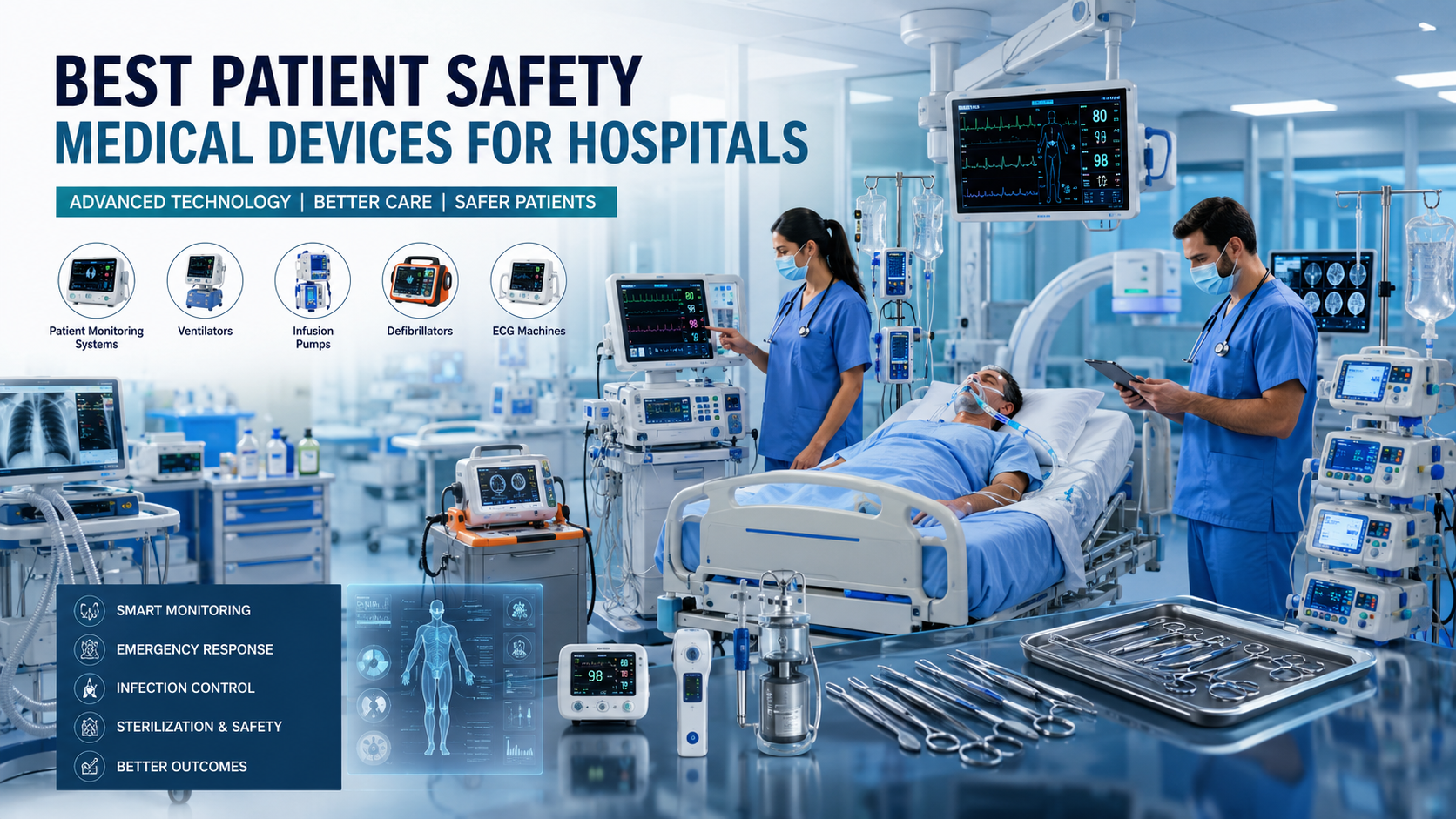
Best Patient Safety Medical Devices for Hospitals
Are You Looking for the Best Patient Safety Medical Devices for Hospitals?
Patient safety has become one of the most critical priorities in modern healthcare. Hospitals today are expected to deliver accurate diagnoses, rapid emergency response, infection-free treatment environments, and continuous patient monitoring—all while improving clinical outcomes and reducing operational risks.
In this fast-evolving healthcare landscape, advanced medical technologies play a direct role in protecting lives and improving hospital efficiency.
From Patient Monitoring Systems in intensive care units to life-saving Defibrillators in emergency rooms, medical devices are no longer just tools—they are essential pillars of safe healthcare delivery.
Whether it is monitoring a newborn in the NICU, supporting a patient on a ventilator, or preventing hospital-acquired infections through modern sterilization systems, every device contributes to better patient care.
Hospitals across the world are investing heavily in smarter, safer, and more connected healthcare technologies. Devices such as Multiparameter Monitors, Pulse Oximeters, Infusion Pumps, and Remote Patient Monitoring Devices are helping healthcare professionals detect complications early and respond faster during critical situations.
At the same time, technologies like Infection Control Equipment, Hospital Sterilizers, and advanced Patient Fall Prevention Systems are reducing avoidable medical incidents and improving overall healthcare quality.
In this article, we will explore the Best Patient Safety Medical Devices for Hospitals, understand their importance in different clinical settings, and examine how they improve patient outcomes, operational safety, and healthcare efficiency.
Why Best Patient Safety Medical Devices for Hospitals Matter
Patient safety is not just about treatment—it is about prevention, monitoring, timely intervention, and reducing medical errors. Modern hospitals deal with thousands of patients daily, and even a small oversight can lead to serious complications.
This is why healthcare facilities rely heavily on advanced Patient Safety Devices and automated healthcare systems.
Imagine an ICU patient whose oxygen levels suddenly begin to drop. Without accurate Vital Signs Monitors or reliable Pulse Oximeters, healthcare staff may not recognize the emergency in time. Similarly, a cardiac arrest situation without accessible Automated External Defibrillators (AEDs) can become fatal within minutes.
Modern patient safety strategies focus on:
- Early detection of health deterioration
- Continuous patient monitoring
- Infection prevention
- Accurate medication delivery
- Emergency preparedness
- Reduced human error
- Improved communication between healthcare teams
Today’s hospitals also use integrated technologies like Smart Patient Monitoring Systems and centralized dashboards that allow clinicians to track multiple patients simultaneously.
Another important aspect is Healthcare Risk Management. Hospitals are under increasing pressure to maintain safety standards, reduce legal liabilities, and comply with strict healthcare regulations.
Additionally, healthcare institutions must follow Medical Device Compliance standards to ensure that equipment is safe, accurate, and regularly maintained.
Essential Monitoring and Critical Care Devices for Patient Safety
1. Patient Monitoring Systems
Among the Best Patient Safety Medical Devices for Hospitals, advanced Patient Monitoring Systems remain one of the most important technologies.
These systems continuously track:
- Heart rate
- Respiratory rate
- Blood pressure
- Oxygen saturation
- Body temperature
These systems are especially important in:
- Intensive Care Units (ICUs)
- Emergency departments
- Post-operative recovery rooms
- Neonatal care units
- Cardiac wards
Modern AI-integrated monitoring solutions can even predict patient deterioration before symptoms become critical.
2. Multiparameter Monitors and Vital Signs Monitors
Multiparameter Monitors are widely used in ICUs and operation theaters to monitor multiple health indicators in real time.
Similarly, Vital Signs Monitors help clinicians detect subtle changes in patient conditions quickly.
These devices improve:
- Clinical decision-making
- Emergency response time
- Continuous patient supervision
- ICU efficiency
3. ECG Machines
ECG Machines are among the Best Patient Safety Medical Devices for Hospitals because they help detect:
- Heart attacks
- Arrhythmias
- Cardiac abnormalities
- Irregular heart rhythms
Modern ECG systems now offer:
- Cloud integration
- Wireless reporting
- AI-assisted diagnosis
- Faster clinical interpretation
4. Pulse Oximeters
Pulse Oximeters measure oxygen saturation levels and help identify respiratory distress before severe complications occur.
These devices are essential in:
- ICUs
- Emergency rooms
- Ambulances
- Surgical recovery units
- Respiratory care departments
5. Ventilators and Respiratory Care Devices
Ventilators are critical life-support systems used in hospitals for patients with respiratory failure, severe infections, or trauma.
Advanced Respiratory Care Devices now include:
- Intelligent ventilation modes
- Automated oxygen adjustment
- Remote monitoring capabilities
- Smart alarm systems
Hospitals also depend on Oxygen Concentrators to maintain continuous oxygen supply during emergencies.
6. Suction Machines
Suction Machines help remove bodily fluids, mucus, and airway obstructions during surgeries and emergency situations.
These devices are essential for:
- Airway management
- Surgical procedures
- Emergency care
- Respiratory support
Emergency and Surgical Equipment That Improves Patient Safety
1. Defibrillators and AEDs
Among the Best Patient Safety Medical Devices for Hospitals, Defibrillators and Automated External Defibrillators (AEDs) are life-saving emergency devices.
These devices restore normal heart rhythm during sudden cardiac arrest.
Hospitals place AEDs in:
- Emergency departments
- Corridors
- Ambulances
- ICU units
- High-risk patient areas
2. Emergency Medical Equipment
Comprehensive Emergency Medical Equipment ensures hospitals are prepared for:
- Cardiac arrests
- Trauma emergencies
- Respiratory failures
- Disaster situations
Essential emergency devices include:
- Portable ventilators
- Defibrillators
- Emergency suction systems
- Patient transport monitors
- Oxygen delivery systems
3. Anesthesia Machines
Modern Anesthesia Machines include advanced safety features that monitor:
- Gas flow
- Oxygen levels
- Patient ventilation
- Respiratory parameters
These systems reduce anesthesia-related complications significantly.
4. Surgical Instruments and Laparoscopic Instruments
High-quality Surgical Instruments improve surgical precision and reduce tissue damage.
Advanced Laparoscopic Instruments support minimally invasive surgeries with:
- Smaller incisions
- Faster recovery
- Reduced infection risks
- Better patient outcomes
5. Electrosurgical Units
Electrosurgical Units are used in operating rooms for cutting tissue and controlling bleeding during surgeries.
These systems improve:
- Surgical precision
- Bleeding control
- Procedure efficiency
- Patient recovery
6. Diagnostic Imaging Equipment
Accurate diagnosis is essential for patient safety.
Modern Diagnostic Imaging Equipment includes:
- CT scanners
- MRI systems
- Digital X-rays
- Ultrasound machines
Portable Diagnostic Ultrasound Systems are particularly useful in emergency and critical care settings.
Infection Prevention and Sterilization Technologies
1. Infection Control Equipment
Infection Control Equipment helps reduce hospital-acquired infections and improve healthcare safety.
Common systems include:
- Air purification systems
- UV sterilization technologies
- PPE management systems
- Antimicrobial surface solutions
2. Sterilization Equipment and Hospital Sterilizers
Modern Hospital Sterilizers disinfect surgical tools and reusable medical equipment.
Common sterilization systems include:
- Steam sterilizers
- Plasma sterilizers
- Low-temperature sterilizers
These technologies are essential among the Best Patient Safety Medical Devices for Hospitals.
3. Infection Prevention Protocols
Hospitals follow strict Infection Prevention Protocols, including:
- Hand hygiene monitoring
- Sterilization schedules
- Isolation procedures
- Air filtration management
- Medical waste disposal systems
Smart Infusion and Medication Safety Systems
1. Infusion Pumps and Syringe Pumps
Infusion Pumps and Syringe Pumps deliver controlled medication doses directly into the bloodstream.
Modern smart infusion systems include:
- Programmable safety limits
- Drug libraries
- Alarm notifications
- Dosage verification systems
These technologies significantly reduce medication errors.
2. Infusion Therapy Devices
Advanced Infusion Therapy Devices integrate with hospital information systems for real-time monitoring and medication verification.
This improves:
- Medication accuracy
- Patient safety
- Workflow automation
- Documentation efficiency
3. Digital Thermometers
Modern Digital Thermometers support fast and hygienic patient assessment while reducing cross-contamination risks.
4. Nurse Call Systems
Advanced Nurse Call Systems improve communication between patients and healthcare providers.
These systems enable:
- Faster emergency response
- Better patient support
- Improved nursing coordination
5. Hospital Beds with Safety Rails
Modern hospital beds reduce patient falls through:
- Adjustable height systems
- Pressure monitoring
- Smart alarms
- Safety rails
6. Patient Fall Prevention Systems
Patient Fall Prevention Systems use:
- Motion sensors
- Wearable alerts
- Smart monitoring technologies
These systems are especially useful for elderly and post-surgical patients.
ICU, Neonatal, and Infrastructure Safety Equipment
1. ICU Equipment and Critical Care Equipment
Modern ICU Equipment combines multiple technologies such as:
- Ventilators
- Patient monitors
- Infusion systems
- Defibrillators
- Respiratory support devices
These are among the Best Patient Safety Medical Devices for Hospitals because they support life-threatening emergency care.
2. Neonatal Care Equipment
Advanced Neonatal Care Equipment includes:
- Incubators
- Neonatal ventilators
- Infant monitoring systems
- Phototherapy devices
These technologies help protect premature infants and newborns.
3. Medical Gas Pipeline Systems
Reliable Medical Gas Pipeline Systems ensure uninterrupted oxygen and gas supply across:
- ICUs
- Operation theaters
- Emergency departments
4. Remote Patient Monitoring Devices
Modern Remote Patient Monitoring Devices help healthcare teams monitor patients outside hospital environments.
These systems are useful for:
- Chronic disease management
- Elderly patient care
- Home healthcare
- Post-surgical recovery
Importance of Compliance, Maintenance, and Staff Training
Even the Best Patient Safety Medical Devices for Hospitals can become dangerous if not maintained properly.
Hospitals invest heavily in:
- Biomedical Equipment Maintenance
- Calibration programs
- Preventive maintenance
- Software updates
- Equipment safety inspections
Healthcare organizations must also comply with Medical Device Compliance regulations and international patient safety standards.
Regular staff training and emergency simulation programs ensure medical professionals know how to operate critical devices correctly during emergencies.
Future Trends in Best Patient Safety Medical Devices for Hospitals
The future of healthcare safety technology is evolving rapidly through:
- AI-powered patient monitoring
- Wireless ICU systems
- Predictive emergency alerts
- Smart infusion technologies
- Automated infection control systems
- Remote ICU monitoring
- Connected healthcare ecosystems
Hospitals are increasingly adopting interoperable systems where medical devices communicate directly with centralized dashboards and electronic health records.
This improves:
- Clinical accuracy
- Faster decision-making
- Patient safety
- Hospital efficiency
Conclusion: Best Patient Safety Medical Devices for Hospitals
The Best Patient Safety Medical Devices for Hospitals play a critical role in modern healthcare by improving monitoring, diagnosis, emergency response, infection prevention, and medication safety.
From advanced Patient Monitoring Systems and life-saving Ventilators to precision-based Infusion Pumps and intelligent Infection Control Equipment, hospitals depend on these technologies to deliver safe and effective healthcare services.
Devices such as Defibrillators, ECG Machines, Diagnostic Imaging Equipment, and Critical Care Equipment help healthcare providers respond quickly during emergencies and improve clinical outcomes.
As healthcare technology continues to evolve, hospitals must focus not only on acquiring advanced equipment but also on proper maintenance, compliance, staff training, and integrated patient safety strategies.
Investing in the Best Patient Safety Medical Devices for Hospitals is no longer optional—it is essential for improving patient trust, operational efficiency, and treatment success rates.
FAQ: Best Patient Safety Medical Devices for Hospitals
1. What are patient safety medical devices in hospitals?
Patient safety medical devices are healthcare technologies designed to monitor, diagnose, protect, and support patients while reducing medical risks and treatment errors.
2. Why are Patient Monitoring Systems important?
Patient Monitoring Systems help healthcare professionals track vital signs in real time and detect complications early.
3. How do Defibrillators improve patient safety?
Defibrillators and AEDs restore normal heart rhythm during cardiac arrest emergencies and improve survival rates.
4. What is the role of Ventilators in critical care?
Ventilators support patients who cannot breathe properly on their own during respiratory emergencies.
5. How do Infusion Pumps reduce medication errors?
Infusion Pumps deliver accurate medication doses using programmable safety settings and smart alarms.
6. What equipment is commonly used in ICUs?
ICUs commonly use:
- Ventilators
- Multiparameter Monitors
- Pulse Oximeters
- Defibrillators
- Infusion Therapy Devices
7. Why is Infection Control Equipment important?
Infection Control Equipment helps reduce hospital-acquired infections and protects healthcare workers and patients.
8. What are Hospital Sterilizers used for?
Hospital Sterilizers disinfect surgical tools and reusable medical equipment using advanced sterilization methods.
9. How do Patient Fall Prevention Systems work?
These systems use motion sensors and alarms to detect patient movement and prevent accidental falls.
10. What are Remote Patient Monitoring Devices?
Remote Patient Monitoring Devices allow healthcare providers to monitor patients outside hospitals using connected technologies.
11. Why is Biomedical Equipment Maintenance important?
Regular maintenance ensures medical devices function safely, accurately, and reliably.
12. What is Medical Device Compliance?
Medical Device Compliance refers to healthcare regulations and safety standards that ensure medical equipment is approved, tested, and safe for clinical use.
After Reading this i hope this blog really helps you understand what are the Best Patient Safety Medical Devices for Hospitals, so its easy for you to find the Best Patient Safety Medical Devices for Hospitals as per your need.
Connect On Instagram
Also Read: Top Sterilization Equipment Suppliers for Hospitals and Clinics in Birmingham