
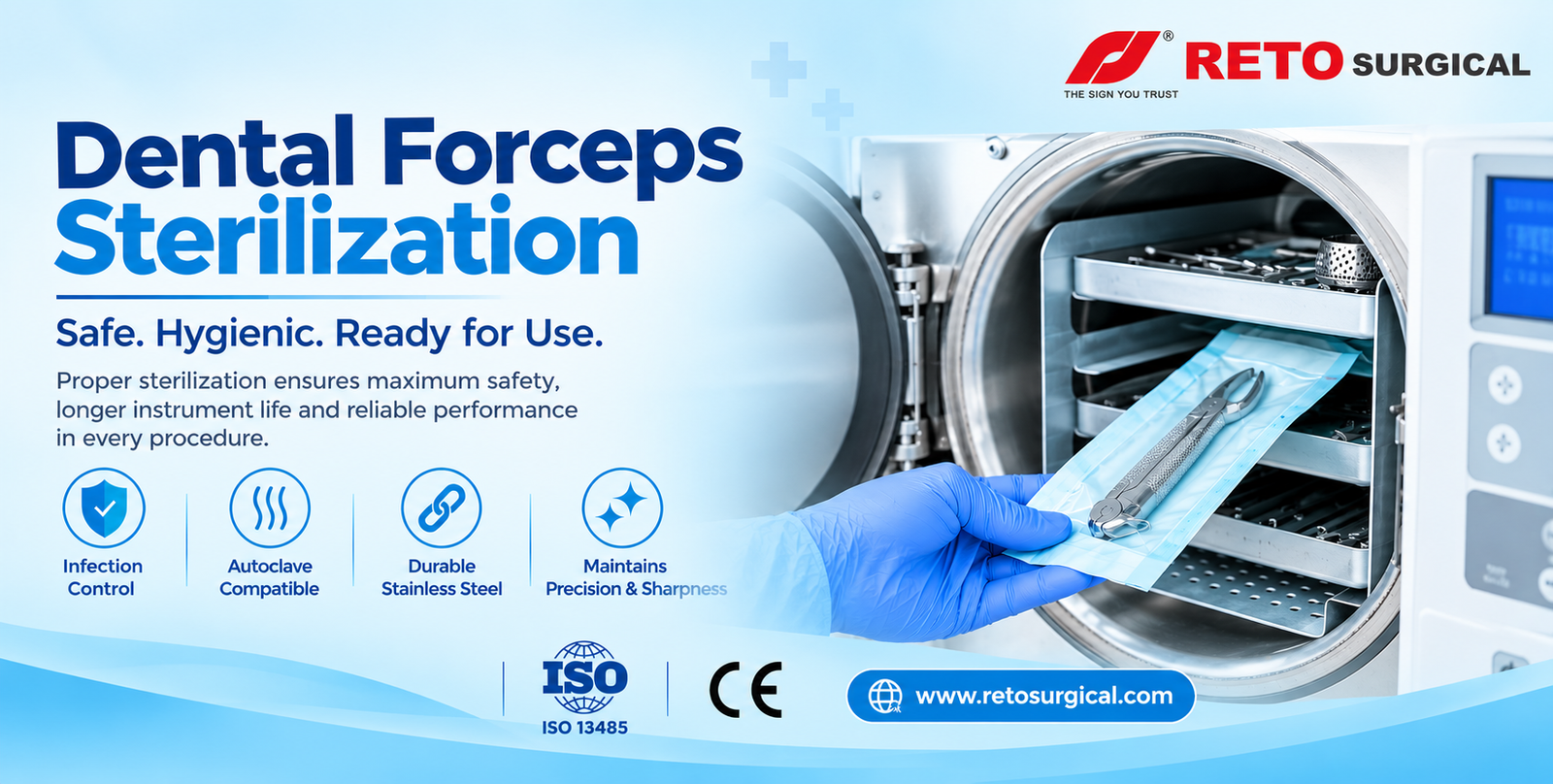
Dental Forceps Sterilization: Complete Guide
Dental Forceps Sterilization: A Complete Guide to Cleaning, Autoclaving, and Infection Prevention
Dental forceps are essential instruments in everyday dentistry, particularly during tooth extraction and oral surgery. Because these instruments may come into contact with blood, saliva, oral tissues, and potentially infectious microorganisms, proper sterilization is a critical part of patient safety.
Dental forceps sterilization is more than placing an instrument inside an autoclave. It involves a carefully controlled process that includes safe handling, cleaning, inspection, packaging, heat sterilization, monitoring, and appropriate storage. Each stage contributes to reducing the risk of cross-contamination and ensuring that reusable instruments are ready for their next clinical use.
For dental clinics, oral surgeons, and dental instrument distributors, understanding this process is essential. Even a high-quality stainless steel instrument cannot be considered safe for reuse if it has not been cleaned and processed correctly.
This guide explains how to sterilize dental forceps, the role of steam autoclaves, the importance of instrument decontamination, and the best practices that support effective infection prevention.
Why Is Dental Forceps Sterilization Important?
Dental extraction forceps are classified as critical instruments because they are used in procedures that involve oral tissues and may come into contact with blood. Critical instruments must be sterilized using an appropriate validated method, typically heat sterilization when the instrument is heat-tolerant.
Sterilization aims to eliminate viable microorganisms, including bacterial spores, rather than simply removing visible dirt or reducing microbial contamination.
Infection prevention and cross-contamination control
Infection prevention and cross-contamination control are fundamental to maintaining a safe dental environment. If used forceps are not processed properly, microorganisms and biological material may remain on their surfaces, potentially exposing patients and dental personnel to infection risks.
Consider a routine tooth extraction. After the procedure, blood and tissue debris may remain around the forceps’ tips, serrations, box joints, and hinge mechanisms. If these areas are not cleaned thoroughly, remaining organic material can interfere with subsequent sterilization.
A reliable reprocessing procedure helps prevent this problem by separating contaminated instruments from clean and sterilized equipment and ensuring that each instrument passes through the required processing stages.
Dental teams should also use appropriate personal protective equipment (PPE), safe instrument transport containers, and designated cleaning areas to reduce exposure to contaminated instruments.
The difference between cleaning, disinfection, and sterilization
These terms describe different processes:
- Cleaning: Removes visible soil, blood, saliva, and other organic material from an instrument.
- Disinfection: Reduces or eliminates many harmful microorganisms, depending on the method and level of disinfection.
- Sterilization: Uses a validated process to eliminate all forms of viable microbial life, including bacterial spores.
Cleaning must take place before sterilization because residual contamination can compromise the effectiveness of the process. Disinfection alone is not an adequate substitute for sterilizing critical dental instruments.
Dental Instrument Decontamination and Pre-Sterilization Cleaning
Dental instrument decontamination and reprocessing involve a sequence of procedures designed to make reusable instruments safe for their next use. Effective reprocessing begins immediately after a dental procedure and continues until the processed instrument is safely stored.
Step 1: Safe handling and transportation
After use, place contaminated dental forceps in a suitable, secure, leak-resistant container for transport to the designated reprocessing area. Avoid carrying loose contaminated instruments by hand or leaving them exposed on clinical work surfaces.
Follow the dental practice’s infection prevention procedures and use appropriate PPE when handling contaminated equipment.
Instruments should be processed promptly according to the manufacturer’s instructions. Allowing blood and other organic material to dry onto the instrument can make cleaning more difficult.
Step 2: Pre-sterilization cleaning of dental forceps
Pre-sterilization cleaning of dental forceps is one of the most important stages in the entire process. An autoclave cannot reliably compensate for inadequate cleaning.
Begin by following the instrument manufacturer’s instructions for the recommended cleaning method, compatible detergents, water quality, temperature limits, and handling precautions.
Depending on the instrument design and the equipment available, cleaning may involve manual cleaning or an automated process.
If manual cleaning is permitted, use the recommended detergent and a suitable instrument-cleaning brush. Pay particular attention to serrated jaws, hinge joints, grooves, and other areas where biological material can accumulate. Keep splashing to a minimum and avoid using abrasive tools that could damage the instrument’s surface.
Where applicable, open hinged forceps during cleaning so that difficult-to-reach surfaces can be accessed. Follow the manufacturer’s instructions for any disassembly, brushing, rinsing, or lubrication requirements.
After cleaning, rinse the instrument as directed and dry it thoroughly before inspection and packaging.
Step 3: Ultrasonic cleaning of dental instruments
Ultrasonic cleaning of dental instruments uses high-frequency sound waves to create microscopic bubbles in a cleaning solution. Their formation and collapse help dislodge contamination from hard-to-reach areas.
This method can be particularly useful for dental forceps with serrations, joints, and complex surfaces. It can also reduce the amount of direct handling required during cleaning.
For effective ultrasonic cleaning:
- Use a cleaning solution specifically suitable for dental instruments and compatible with the manufacturer’s instructions.
- Follow the ultrasonic cleaner’s instructions for solution preparation, operating time, temperature, and maintenance.
- Position instruments correctly in the basket rather than overcrowding the chamber.
- Ensure hinged instruments are opened where the instructions require it.
- Rinse and dry instruments according to the recommended procedure after the cleaning cycle.
Ultrasonic cleaning is not sterilization. Instruments must still undergo the appropriate subsequent processing steps.
Step 4: Washer-disinfector cleaning
A washer-disinfector provides an automated method of cleaning and, where designed and validated for the purpose, thermal disinfection of reusable instruments.
The process typically includes programmed stages such as rinsing, detergent-assisted cleaning, intermediate rinsing, thermal disinfection where applicable, and drying.
Automated equipment can improve consistency and reduce staff exposure to contaminated instruments. However, its effectiveness depends on correct loading, compatible detergents, appropriate cycle selection, equipment maintenance, and compliance with instrument instructions.
Not every forceps design or instrument material is suitable for every cleaning system. Dental practices should verify compatibility before introducing an instrument into an automated reprocessing cycle.
Whether cleaning is performed manually, ultrasonically, or using a washer-disinfector, every instrument must be inspected before proceeding to sterilization.
Inspecting, Packaging, and Steam Autoclave Sterilization
Once dental forceps have been cleaned and dried, the next stage is to confirm their condition, prepare them for sterilization, and select an appropriate validated cycle.
Inspecting reusable dental forceps
Inspect each instrument under adequate lighting. Check for:
- Remaining blood, debris, or detergent residue.
- Rust, corrosion, staining, or surface deterioration.
- Cracks, damaged serrations, or worn gripping surfaces.
- Loose joints, excessive resistance, or poor alignment.
- Signs of damage that could affect safe operation.
If an instrument remains visibly contaminated, return it for further cleaning before sterilization. Damaged or malfunctioning forceps should be removed from service and assessed, repaired, or replaced as appropriate.
Inspection also helps protect the longevity of reusable dental instruments. Poor maintenance, unsuitable cleaning chemicals, and incompatible processing conditions can gradually damage even well-manufactured stainless steel instruments.
Sterilization pouches and safe instrument storage preparation
Before autoclaving, dry instruments thoroughly and package them in sterilization pouches, wraps, or reusable containers specifically compatible with the selected sterilization method.
Sterilization pouches and safe instrument storage are important because packaging must allow the sterilizing agent to reach the instrument while maintaining an appropriate barrier after the cycle.
For hinged forceps, follow the manufacturer’s guidance on whether the instrument should be open or positioned in a particular way during sterilization. Do not overload packages, and ensure that the packaging system is suitable for the instrument and sterilizer.
Use internal chemical indicators in each package as directed. External indicators should also be used when required by the packaging system and applicable guidance.
Label packages with the information required by the practice’s procedures and applicable regulations. This may include the sterilizer identification, load or cycle number, sterilization date, and expiry date where applicable.
Steam autoclave sterilization
Steam autoclave sterilization is a widely used method for processing heat-tolerant dental instruments. It uses saturated steam under pressure to deliver the required sterilization conditions throughout a properly loaded chamber.
The effectiveness of an autoclave cycle depends on several factors, including temperature, exposure time, steam quality, air removal, packaging, loading, and the instrument’s own processing requirements.
A safe workflow includes the following:
- Confirm that the forceps have been cleaned, inspected, dried, and packaged appropriately.
- Load packages according to the sterilizer manufacturer’s instructions, allowing the steam to circulate properly.
- Select a validated cycle compatible with the instrument, packaging, and sterilizer.
- Confirm that the required cycle parameters have been achieved.
- Allow the load to dry and cool as directed before handling or storage.
- Review the cycle records and indicators before releasing the processed load for use.
There is no single time-and-temperature setting that is appropriate for every autoclave, packaging system, and dental instrument. Always follow the validated instructions for the particular equipment and instrument. Do not shorten cycles, overload the chamber, or use unwrapped sterilization simply for convenience.
If packages remain wet, torn, punctured, or otherwise compromised, they should not be treated as ready for patient use. Reprocess affected instruments according to the established procedure.
Sterilization Indicators, Monitoring, and Quality Control
Even when an autoclave completes its programmed cycle, dental teams need evidence that the process operated as intended. This is where biological, chemical, and mechanical sterilization indicators play an essential role.
No single indicator provides every piece of information needed to assess a sterilization cycle. A comprehensive monitoring programme combines different types of checks and maintains appropriate records.
Mechanical indicators
Mechanical monitoring involves checking the sterilizer’s displayed or recorded cycle parameters, including temperature, pressure, and exposure time.
These checks should be performed for every load. If the recorded parameters do not meet the sterilizer manufacturer’s requirements, the affected packages should not be released for patient use until the problem has been investigated and resolved.
Chemical indicators
Chemical indicators change in response to specified sterilization conditions. They may be incorporated into packaging, supplied as indicator strips, or used as external indicator tape.
An internal chemical indicator helps show whether the sterilizing agent reached the inside of a package and whether the indicator’s specified conditions were met. An external indicator can help distinguish processed packages from unprocessed ones.
However, a colour change alone does not prove that an instrument is sterile. Chemical indicators must be interpreted alongside mechanical monitoring and biological testing.
Biological indicators
Biological indicators, commonly called spore tests, assess the sterilization process using highly resistant microorganisms. They provide important evidence about the ability of the process to inactivate resistant microbial spores.
The US Centers for Disease Control and Prevention (CDC) recommends monitoring dental sterilizers with biological indicators at least weekly, following the relevant manufacturer’s instructions and applicable requirements. Implantable devices require additional attention, including biological monitoring for every load under CDC recommendations.
Dental practices in the United Kingdom should also follow applicable UK guidance, including relevant local decontamination procedures and HTM 01-05 where appropriate.
Maintain sterilization logs, biological test results, maintenance records, and records of any corrective action. Good documentation supports traceability and helps a practice investigate potential sterilization failures.
What happens if a monitoring test fails?
If mechanical readings or chemical indicators suggest a problem, do not release the affected packages for patient use. Investigate the cycle, loading, packaging, cleaning, and equipment condition.
If a biological indicator produces a positive result, follow the sterilizer manufacturer’s instructions and the applicable failure-response protocol. This may involve removing the sterilizer from service, repeating tests, investigating procedures, arranging servicing, and assessing whether previously processed instruments need to be recalled and reprocessed.
A documented quality-control procedure helps dental teams respond consistently instead of relying on assumptions.
Safe Storage, Instrument Maintenance, and Manufacturer's Instructions
Successful dental forceps sterilization does not end when the autoclave cycle finishes. Instruments must remain protected from contamination until they are needed.
Safe storage of sterilized dental forceps
Store sterilized, packaged instruments in clean, dry, covered or closed cabinets. Keep them away from moisture, excessive handling, and areas where packaging could be damaged.
Before opening a package, inspect it for wetness, tears, punctures, broken seals, or other signs of compromised integrity. If the package has been damaged or contaminated, reprocess the instrument before use.
Follow the practice’s approved stock rotation and storage policy. Shelf-life decisions should account for packaging instructions, applicable guidance, and events that may compromise the package.
Follow manufacturer’s instructions for reusable dental instruments
Manufacturer’s instructions for reusable dental instruments should guide every stage of reprocessing. This includes cleaning products, ultrasonic or washer-disinfector compatibility, preparation of hinged instruments, lubrication where applicable, packaging, sterilization cycles, drying, and maintenance.
Dental forceps may look similar but differ in material composition, surface finish, joint construction, and design. These differences can affect the appropriate cleaning and sterilization procedures.
Instrument manufacturers should provide clear, product-specific reprocessing instructions that help users understand how to clean, inspect, sterilize, and maintain their products.
For dental clinics and distributors, checking these instructions before purchasing or introducing a new instrument can help prevent avoidable processing errors.
Maintaining instrument performance
Regular maintenance supports both instrument longevity and reliable clinical performance. Follow the manufacturer’s recommendations for joint care, inspection, corrosion prevention, and servicing.
Avoid unapproved cleaning chemicals or abrasive methods that may damage stainless steel surfaces. If rust, pitting, loose joints, or other defects are identified, assess the instrument before returning it to service.
For clinics purchasing reusable forceps, selecting appropriately manufactured instruments and ensuring access to clear reprocessing instructions can support consistent quality management.
Conclusion
Dental forceps sterilization is a critical part of safe dental practice. Effective reprocessing depends on a complete, correctly sequenced workflow that includes safe handling, thorough cleaning, inspection, suitable packaging, validated steam autoclave sterilization, monitoring, and protected storage.
Ultrasonic cleaners and washer-disinfectors can support effective cleaning, while mechanical, chemical, and biological indicators help dental teams evaluate sterilization performance. Equally important are staff training, accurate documentation, routine equipment maintenance, and compliance with the manufacturer’s instructions.
For dental clinics, oral surgeons, and dental instrument distributors, the goal is straightforward: ensure that reusable forceps are properly processed and ready for safe clinical use every time.
Looking for reliable dental forceps and reusable dental instruments? Explore Reto Surgical’s dental instrument range at https://retosurgical.com and contact the team to discuss product specifications, manufacturing capabilities, and your instrument requirements.
Follow us
FAQs
The following FAQs target informational searches and long-tail keywords that can help expand the article’s relevance. The answers follow general infection-control principles; practices should use current local guidance and product-specific instructions.
- What is dental forceps sterilization?
Dental forceps sterilization is the process of treating reusable forceps with a validated method, usually steam sterilization, to eliminate viable microorganisms, including bacterial spores. Thorough cleaning must take place first.
- How do you sterilize dental forceps?
Safely handle and clean the forceps, inspect them for contamination or damage, dry and package them appropriately, run a validated sterilization cycle, check monitoring results, and store the processed package correctly.
- Can dental forceps be sterilized in an autoclave?
Yes. Reusable, heat-tolerant dental forceps can generally be sterilized in a compatible steam autoclave, provided the instrument and sterilizer manufacturers’ instructions are followed.
- Why is steam autoclave sterilization used for dental forceps?
Steam under pressure can deliver effective sterilization conditions throughout properly prepared and loaded instruments. It is widely used for reusable dental instruments that tolerate heat and moisture.
- Why must dental forceps be cleaned before sterilization?
Blood, saliva, and other organic debris can shield microorganisms and interfere with the sterilization process. Cleaning removes this contamination before the instrument is packaged and sterilized.
- What is dental instrument decontamination and reprocessing?
It is the complete workflow for safely preparing used dental instruments for reuse. Depending on the instrument and applicable procedure, it includes handling, cleaning, inspection, packaging, sterilization, monitoring, and storage.
- What is ultrasonic cleaning of dental instruments?
Ultrasonic cleaning uses high-frequency sound waves to help remove debris from instrument surfaces and difficult-to-reach areas. It is a cleaning method, not a sterilization method.
- What is a washer-disinfector in dentistry?
A washer-disinfector is an automated system designed to clean instruments and provide thermal disinfection when the selected cycle is validated for that purpose. It does not automatically replace the required sterilization stage for critical instruments.
- Should dental forceps be open during sterilization?
Follow the manufacturer’s instructions. Hinged instruments may need to be opened or positioned in a specified way to allow effective cleaning and sterilization.
- Should dental forceps be dried before autoclaving?
Yes, instruments should be dried thoroughly before packaging. After sterilization, follow the sterilizer and packaging instructions for drying and cooling before handling or storage.
- Can dental forceps be sterilized without a pouch?
Some validated sterilization procedures allow unwrapped instruments for immediate use, but unwrapped sterilization should not be used routinely for convenience. Follow applicable guidance and the instrument and sterilizer instructions.
- What are dental sterilization pouches used for?
Compatible sterilization pouches allow the sterilizing agent to reach instruments and help maintain sterility after processing when the package remains intact and is stored appropriately.
- What are biological indicators in dental sterilization?
Biological indicators, or spore tests, use highly resistant microorganisms to assess whether a sterilization process has effectively inactivated the test organisms.
- What are chemical indicators used for in an autoclave?
Chemical indicators respond to specified sterilization conditions. Internal indicators help assess whether conditions reached inside a package, while external indicators can help distinguish processed from unprocessed packages.
- What is mechanical monitoring of dental sterilization?
Mechanical monitoring involves reviewing and recording the sterilizer’s cycle parameters, including temperature, pressure, and exposure time, for each load.
- How often should dental autoclaves undergo biological monitoring?
The CDC recommends biological monitoring at least weekly for dental sterilizers. Follow the applicable local requirements and manufacturer’s instructions, including additional monitoring recommendations for implantable devices.
- What should you do if an autoclave indicator fails?
Do not release affected packages for patient use when monitoring indicates a problem. Follow the practice’s failure-response procedure, investigate the cause, and reprocess instruments when required.
- How should sterilized dental forceps be stored?
Store them in clean, dry, covered or closed cabinets, protected from moisture and damage. Inspect packaging before use and reprocess instruments if package integrity has been compromised.
- Can sterilized dental forceps become contaminated during storage?
Yes. Wet, torn, punctured, or improperly handled packaging can compromise the instrument’s sterile status. Affected instruments should be reprocessed before clinical use.
- How can you prevent cross-contamination when handling dental forceps?
Use appropriate PPE, safe transport containers, designated dirty and clean work areas, validated cleaning and sterilization procedures, and protected storage. Train staff to follow the same documented workflow.
- What materials are commonly used to manufacture dental forceps?
Stainless steel is commonly used because it can provide strength, corrosion resistance, and durability. Suitability for repeated reprocessing depends on the specific alloy, instrument design, surface finish, and manufacturer’s instructions.
- Why do dental forceps develop rust or corrosion?
Possible causes include unsuitable chemicals, residual contamination, poor drying, water quality, damaged surfaces, or incompatible processing conditions. Follow the manufacturer’s maintenance instructions and remove damaged instruments from service when necessary.
- How often should dental forceps be inspected?
Inspect instruments after cleaning and before packaging, and check packaged instruments before use. Routine maintenance inspections should also follow the manufacturer’s recommendations and the practice’s quality procedures.
- Are cleaning and sterilization instructions the same for every dental forceps model?
No. Different designs, materials, hinges, and surface finishes may have different processing requirements. Always consult the instructions for the specific instrument and the equipment being used.
- Where can dental clinics source reusable dental forceps?
Dental clinics and distributors can approach established dental instrument manufacturers such as Reto Surgical to discuss product specifications, available designs, manufacturing capabilities, and supply requirements. Confirm the relevant product documentation and reprocessing instructions before purchase.