
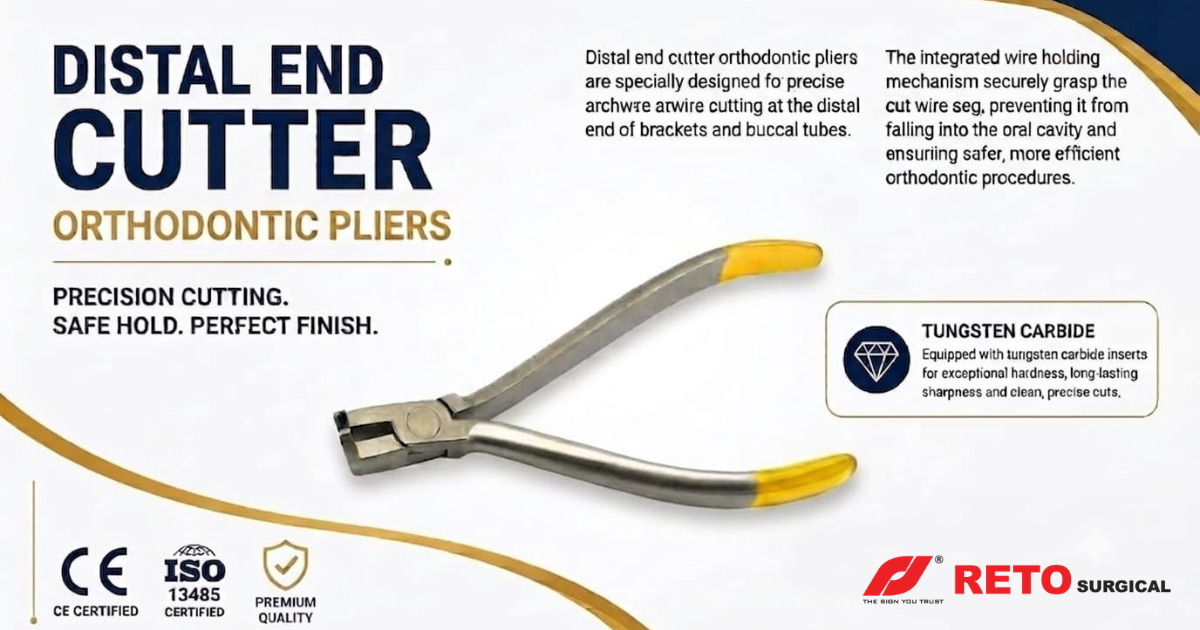
Distal End Cutter Orthodontic Pliers | Flush Cut & Hold Wire Cutters
Distal End Cutter Orthodontic Pliers: A Complete Guide for Precision Orthodontic Wire Cutting
The Importance of Distal End Cutter Orthodontic Pliers in Modern Dentistry
Orthodontic procedures require precision, reliability, and instruments that allow clinicians to work efficiently while ensuring patient comfort. Among the essential tools used in orthodontic practices, Distal End Cutter Orthodontic Pliers play a crucial role in trimming excess arch wire after bracket placement and adjustment. These specialised instruments are designed to cut and manage distal wire extensions safely, preventing discomfort and improving treatment outcomes.
During orthodontic treatment, excess wire extending beyond the last bracket can irritate the patient’s cheeks and soft tissues. A high-quality Orthodontic Wire Cutter allows orthodontists to perform accurate Orthodontic Arch wire Cutting while maintaining control over the cut fragment. Unlike standard cutting pliers, distal end cutters orthodontic pliers are specifically engineered for controlled Distal Wire Removal, making them an indispensable instrument in orthodontic clinics and dental laboratories.
Modern designs such as the Slim Distal End Cutter, Flush Cut & Hold Distal End Cutter, and Safety Hold Distal End Cutter have improved the efficiency of orthodontic procedures by combining cutting performance with enhanced safety features. These advanced instruments help orthodontists achieve clean cuts while reducing the risk of wire fragments falling into the patient’s mouth.
Understanding Distal End Cutter Orthodontic Pliers and Their Applications
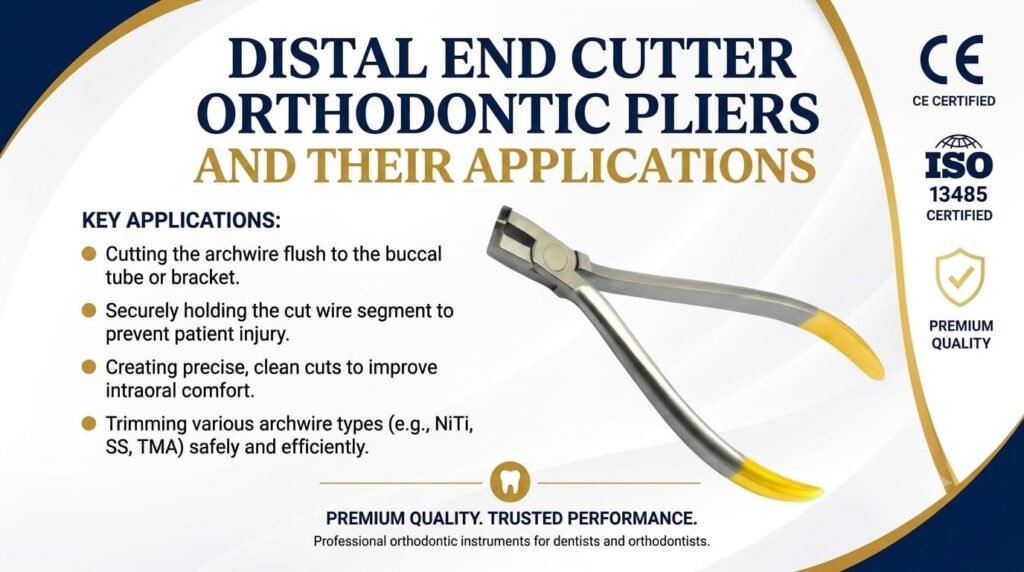
Designed for Accurate Orthodontic Wire Management
The primary purpose of Distal End Cutter Orthodontic Pliers is to cut arch wires close to the distal end of the last bracket or buccal tube. They are commonly used after inserting orthodontic wires into braces, where precise trimming is required.
Unlike conventional wire cutters, these specialised Orthodontic Cutting Pliers feature a unique design that allows the clinician to access difficult posterior areas. Their angled head and narrow profile make them particularly effective for reaching molar regions.
The most common applications include:
- Orthodontic Bracket Wire Cutting
- Distal End Arch wire Management
- Buccal Tube Flush Cutting
- Removal of excess orthodontic wire
- Adjustment of fixed orthodontic appliances
A well-designed distal cutter provides a clean finish, preventing sharp edges that may cause irritation or injury.
Types of Distal End Cutters Used in Orthodontics
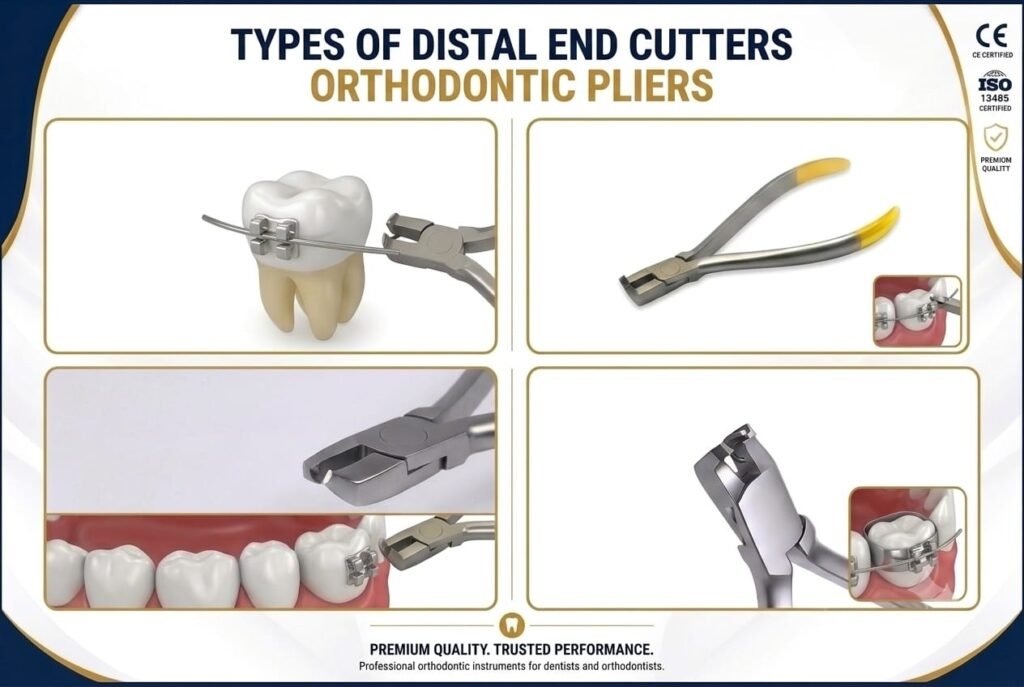
Slim Distal End Cutter for Improved Clinical Access
The Slim Distal End Cutter is designed with a reduced working end that provides better visibility and access in confined areas. Its Slimline Orthodontic Instrument Design allows orthodontists to work comfortably around brackets, tubes, and ligatures.
The slim profile helps reduce interference during procedures and makes it easier to position the instrument accurately, especially in posterior regions.
Flush Cut & Hold Distal End Cutter
The Flush Cut & Hold Distal End Cutter combines cutting ability with a holding mechanism. After cutting the wire, the instrument securely captures the trimmed piece instead of allowing it to fall into the patient’s mouth.
This feature is particularly valuable during chairside procedures because it improves safety and efficiency.
Safety Hold Distal End Cutter
A Safety Hold Distal End Cutter incorporates a specialised Wire Holding Mechanism designed to prevent accidental release of cut wire segments. This reduces chairside risks and improves patient confidence during orthodontic adjustments.
Universal Cut & Hold Distal End Cutter
The Universal Cut & Hold Distal End Cutter provides versatility for various orthodontic applications. It is suitable for clinicians who require a reliable instrument capable of handling different wire types and sizes.
Key Features of High-Quality Distal End Cutters
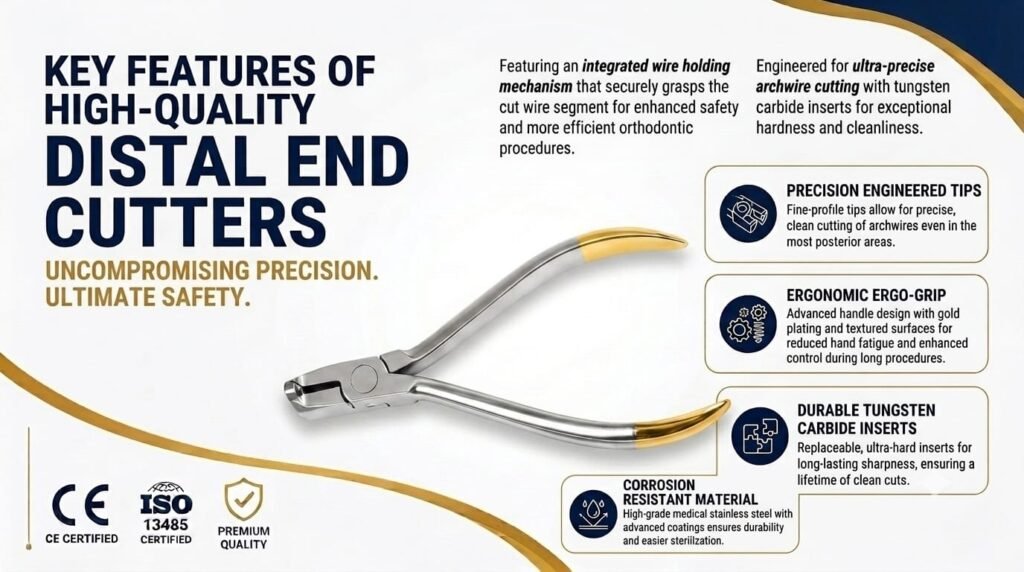
Precision Cutting Edges and Tungsten Carbide Technology
The performance of a distal cutter orthodontic pliers depends heavily on the quality of its cutting edges. Premium instruments feature Precision Cutting Edges manufactured for repeated accurate cutting.
Many professional models incorporate a Tungsten Carbide Tip Cutter design. Tungsten carbide provides exceptional hardness and durability, allowing the instrument to maintain sharpness over extended clinical use.
A Tungsten Carbide Insert enhances cutting performance, especially when working with harder orthodontic wires.
These features support reliable:
- Hard Wire Cutting
- Stainless steel arch wire trimming
- Nickel titanium wire adjustment
- Long-term instrument performance
Arch wire Cutting Capacity
Professional distal cutters are designed to handle different orthodontic wire dimensions. Many models offer an Arch wire Cutting Capacity (.012″ to .021″ x .025″), making them suitable for a wide range of orthodontic treatments.
The ability to cut different wire sizes allows orthodontists to use one instrument for multiple procedures, improving workflow efficiency.
Flush Wire Trimming for Patient Comfort
One of the most important benefits of a quality distal end cutter orthodontic pliers is precise Flush Wire Trimming.
When excess wire is removed properly, the remaining wire end sits smoothly against the appliance. This reduces irritation and improves Patient Comfort Wire Cutting outcomes.
A flush cut is especially important in areas where the wire is close to cheek tissues, helping minimise discomfort throughout treatment.
Material Quality and Manufacturing Standards
Stainless Steel Construction for Long-Term Performance
Professional orthodontic instruments require materials that can withstand frequent sterilisation and clinical use. High-quality Stainless Steel Orthodontic Pliers are manufactured using durable materials that provide strength, corrosion resistance, and reliability.
Many premium instruments use Medical Grade Stainless Steel Construction, including Corrosion Resistant Stainless Steel (410/420).
These materials provide:
- Excellent mechanical strength
- Resistance against rust and corrosion
- Compatibility with repeated sterilisation
- Long service life
Autoclavable and Reusable Dental Instruments
Modern clinics depend on instruments that meet strict hygiene requirements. Autoclavable Orthodontic Instruments can be safely sterilised between procedures, supporting infection control standards.
Reusable models are commonly used as Reusable Dental Lab Instruments because they offer consistent performance over many treatment cycles.
Design Features That Improve Clinical Efficiency
Mini Head and Reduced Working End Design
Mini Head Distal End Cutter orthodontic pliers provide improved access and visibility when working around posterior teeth. The smaller head design helps orthodontists position the cutter accurately without blocking their view.
The Reduced Working End Design supports:
- Better access behind molars
- Improved control during cutting
- Reduced patient discomfort
- Easier handling during complex cases
Adjustable Screw Joint Mechanism
A precision Adjustable Screw Joint Mechanism allows manufacturers to maintain smooth instrument movement and proper alignment of cutting surfaces.
This feature contributes to:
- Consistent cutting pressure
- Reduced hand fatigue
- Longer instrument lifespan
Diamond-Honed Cutting Edges
Premium orthodontic cutters often feature Diamond-Honed Cutting Edges that provide exceptional sharpness and accuracy.
These refined edges allow smooth cutting without excessive force, protecting both the instrument and the orthodontic wire.
Choosing the Right Distal End Cutter for Professional Use
Orthodontists should consider several factors when selecting a distal cutter:
- Cutting Requirements
Different treatments require different cutting capabilities. Clinicians working with heavier arch wires may prefer a Hard Wire Cutter with reinforced cutting surfaces.
- Visibility and Access
A slim or mini-head design may be preferable for clinicians who frequently work in posterior areas.
- Safety Features
A cutter with a wire retention system provides additional protection during patient procedures.
The Orthodontic Wire Retention System helps prevent cut fragments from entering the oral cavity.
- Quality Certifications
Professional dental instruments should meet recognised quality standards. Manufacturers producing CE Certified Orthodontic Instruments and ISO 13485 Orthodontic Instruments follow strict medical device quality management systems.
Role of Precision Manufacturing in Orthodontic Instrument Quality
Reliable orthodontic tools depend on advanced manufacturing processes. Precision Instrument Manufacturing ensures accurate dimensions, smooth finishing, and consistent performance.
Leading manufacturers use:
- CNC machining technology
- Heat treatment processes
- Surface finishing
- Ultrasonic cleaning
- Quality inspections
These processes ensure that instruments such as Labial Orthodontic Pliers, Lingual Distal End Cutter, and Long Handle Distal End Cutter meet professional clinical requirements.
Conclusion
A reliable Distal End Cutter Orthodontic Pliers solution is essential for safe and efficient orthodontic procedures. From Flush End Distal Cutter designs to advanced safety-hold models, these instruments help orthodontists achieve accurate wire management while improving patient comfort.
Features such as Tungsten Carbide Inserts, Precision Cutting Edges, ergonomic designs, and certified manufacturing standards make professional distal cutters valuable investments for modern dental practices.
When choosing orthodontic instruments, clinicians should focus on durability, cutting performance, sterilisation compatibility, and manufacturer quality standards to ensure dependable results.
Frequently Asked Questions (FAQs)
- What is distal end cutter orthodontic pliers used for?
Distal end cutter orthodontic pliers are used to cut excess arch wire after placement of braces and orthodontic appliances.
- What is the difference between a distal cutter and a regular wire cutter?
A distal cutter is specifically designed for orthodontic arch wire trimming and often includes a holding mechanism for safety.
- What is a flush cut distal end cutter?
A flush cut distal end cutter removes excess wire close to the bracket or buccal tube to reduce irritation.
- Why is a wire holding mechanism important?
It prevents cut wire pieces from falling into the patient’s mouth during orthodontic procedures.
- What wires can distal end cutters cut?
Most professional cutters can handle stainless steel, nickel titanium, and various orthodontic arch wires.
- What is a tungsten carbide distal cutter?
It is an orthodontic cutter with tungsten carbide inserts that improve hardness and cutting durability.
- Is distal end cutters autoclavable?
Yes, most medical-grade stainless steel distal cutters are designed for sterilisation in autoclaves.
- How long do orthodontic distal cutters last?
Their lifespan depends on material quality, usage frequency, maintenance, and sterilisation practices.
- What is the benefit of a slim distal end cutter?
Slim designs provide improved access and visibility in difficult posterior areas.
- What does flush wire trimming mean?
Flush wire trimming means cutting the wire smoothly and closely to the appliance without leaving sharp edges.
- What is the purpose of tungsten carbide inserts?
They improve cutting strength and maintain sharp edges for longer periods.
- Can distal cutters cut hard orthodontic wires?
Yes, high-quality hard wire cutters are designed for stronger orthodontic materials.
- What materials are used to manufacture distal cutters?
Most professional models are made from medical-grade stainless steel such as 410 or 420 stainless steel.
- Are distal end cutters reusable?
Yes, many models are reusable dental instruments designed for repeated sterilisation.
- What is a safety hold distal cutter?
It is a cutter designed to hold the cut wire segment securely after cutting.
- Why are precision cutting edges important?
They ensure clean cuts, reduce hand pressure, and improve instrument performance.
- What certifications should orthodontic instruments have?
Professional instruments may comply with CE marking and ISO 13485 quality standards.
- What is the difference between labial and lingual distal cutters?
Labial cutters are commonly used on the front-facing side of appliances, while lingual cutters are designed for internal surfaces.
- How should orthodontic cutters be maintained?
They should be cleaned properly, sterilised according to guidelines, and inspected regularly.
- Can distal cutters improve patient comfort?
Yes, accurate wire removal reduces sharp edges that can irritate cheeks and soft tissues.
- What is a mini head distal end cutter?
It is a compact cutter designed for improved access and visibility during orthodontic procedures.
- Why choose ISO 13485 orthodontic instruments?
ISO 13485 indicates that the manufacturer follows a recognised medical device quality management system.
- What is the advantage of diamond-honed cutting edges?
They provide sharper, smoother, and more consistent cutting performance.
- Are distal cutters suitable for dental laboratories?
Yes, many are used as professional dental orthodontic laboratory tools.
- How do I choose the best distal end cutter?
Consider wire capacity, cutting design, material quality, safety features, ergonomics, and certification standards.