
Surgical Dressing Forceps Suppliers | Quality Medical Instruments
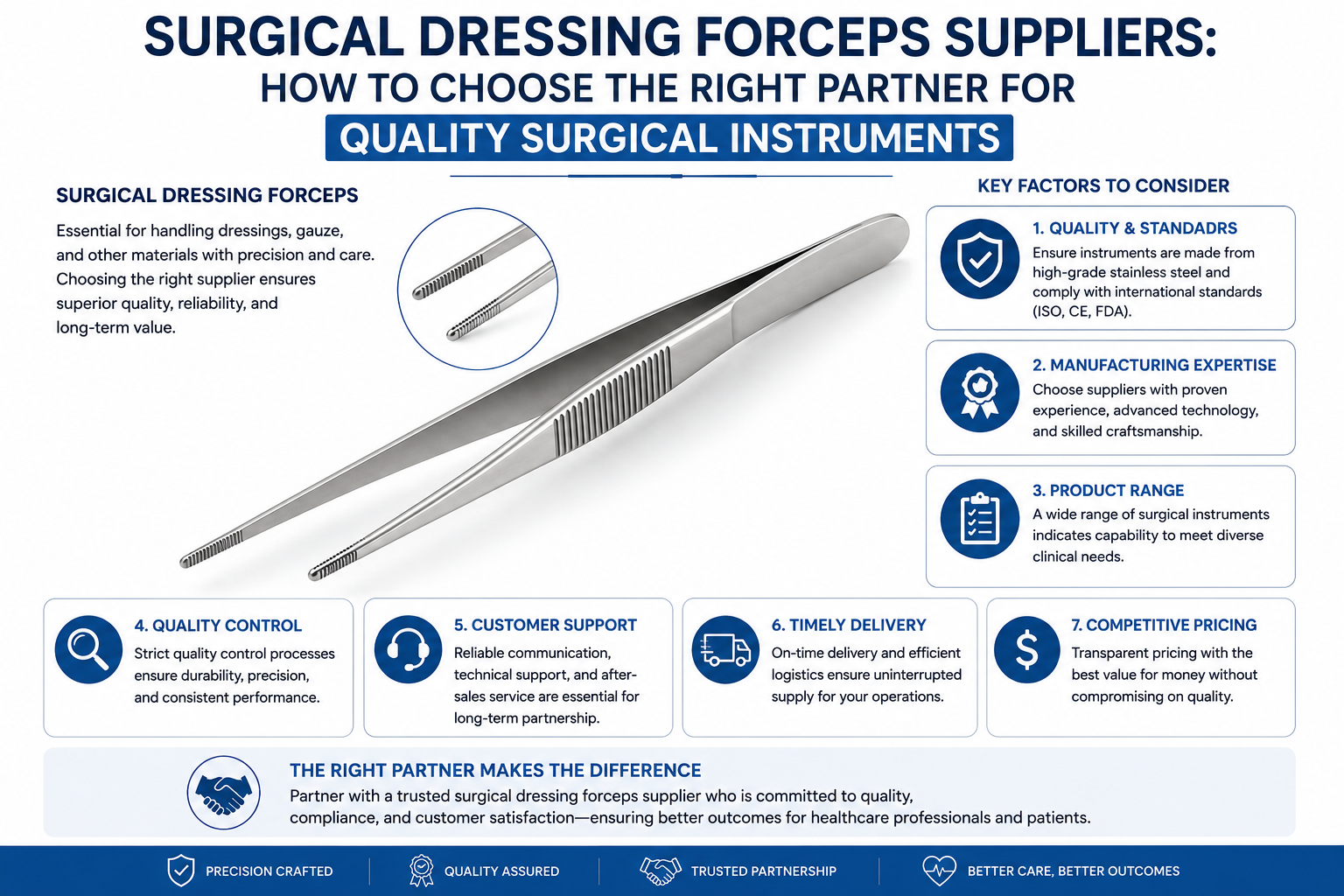
Surgical Dressing Forceps Suppliers: How to Choose the Right Partner for Quality Surgical Instruments
Introduction
When it comes to patient care, even the smallest surgical instrument can have a significant impact on clinical outcomes. Among the many tools used daily in hospitals, clinics, and operating theatres, Dressing Forceps are indispensable for wound management, dressing changes, and minor surgical procedures. Their precision, reliability, and ease of use make them one of the most frequently used Wound Care Instruments across healthcare settings.
However, selecting the right surgical dressing forceps is only half the equation. Choosing reputable dressing forceps suppliers is equally important. Healthcare professionals rely on suppliers that consistently provide high-quality, compliant instruments capable of meeting demanding clinical environments. Whether you are sourcing equipment for a private practice, a hospital procurement department, or purchasing through the NHS Supply Chain, understanding what differentiates a trusted supplier can help you make informed purchasing decisions.
In this guide, we’ll explore the different types of dressing forceps, the features that matter most, and what to look for when evaluating medical instrument suppliers.
Understanding Surgical Dressing Forceps and Their Clinical Applications
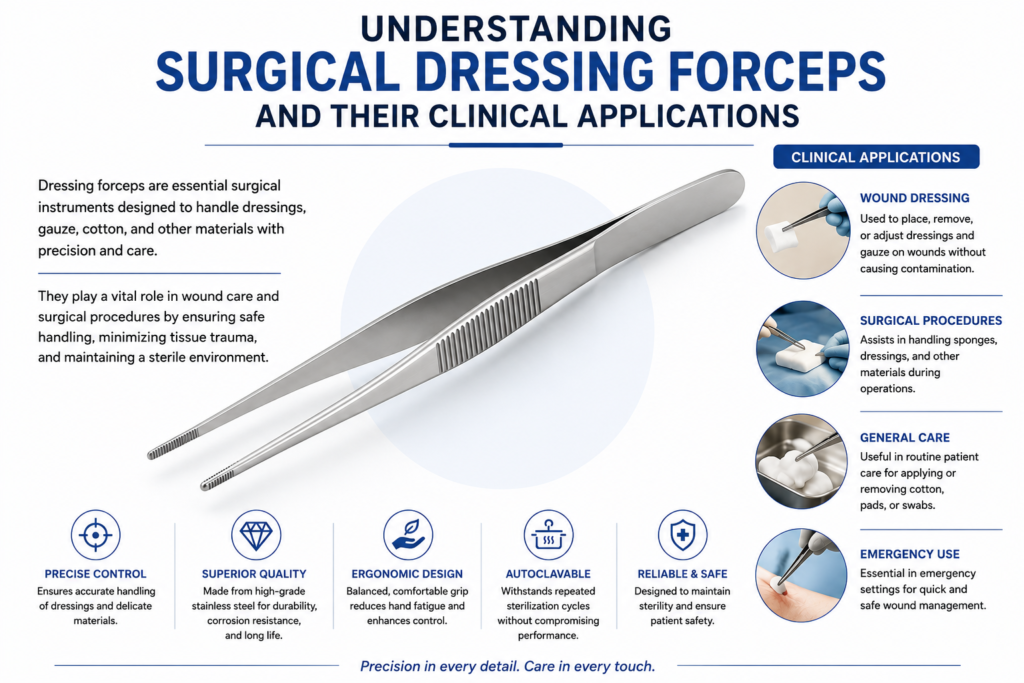
Surgical Dressing Forceps are handheld instruments designed to grasp, manipulate, and position dressings, gauze, sutures, and delicate tissue during medical procedures. Their simple appearance often hides the precision engineering required to ensure safe and effective handling.
These instruments are used in:
- General surgery
- Emergency departments
- Outpatient clinics
- Minor surgical procedures
- Wound dressing changes
- Community healthcare
- Veterinary medicine
Among the most commonly requested options are Straight Dressing Forceps, which provide excellent visibility and control during routine procedures. Their straight profile allows clinicians to access wounds efficiently while maintaining precision.
For more specialised procedures, Hartmann Dressing Forceps are widely recognised for their fine construction. Frequently used in ENT procedures, these instruments offer exceptional control when working within confined anatomical spaces.
Another popular choice is Serrated Jaw Dressing Forceps, designed with textured gripping surfaces that minimise slippage when handling dressings or tissue. The addition of Serrated Tips improves grip without requiring excessive pressure, reducing the risk of damaging delicate materials.
Healthcare providers often complement these with Thumb Forceps, allowing precise one-handed operation during routine examinations and dressing applications.
Features That Define High-Quality Dressing Forceps
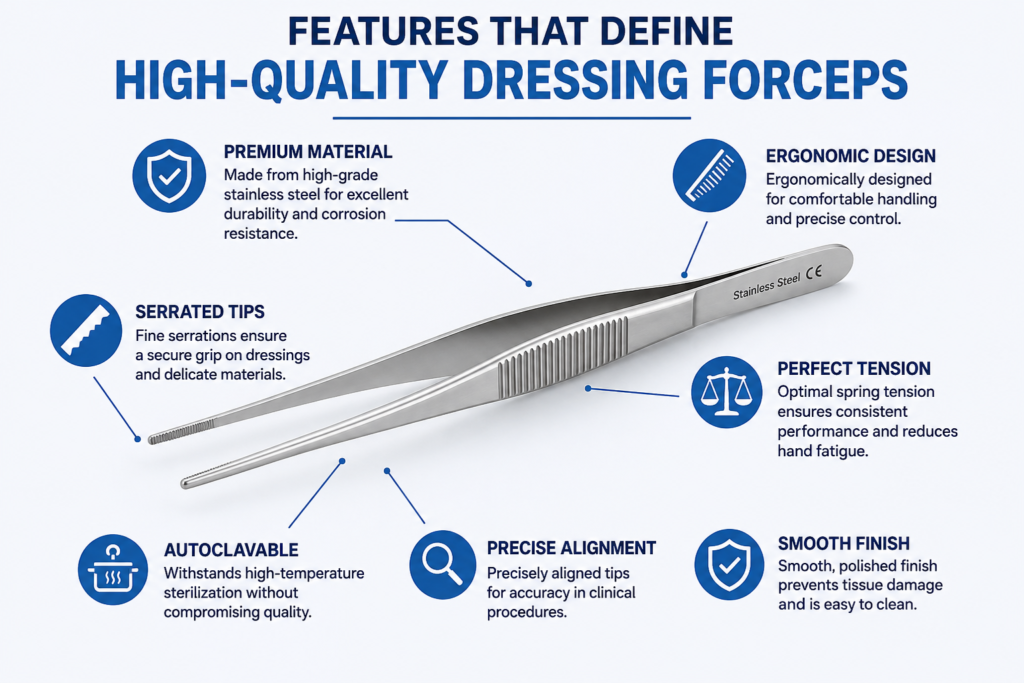
Not all forceps are manufactured to the same standard. Experienced buyers know that material quality, design, and manufacturing consistency directly affect performance and longevity.
One of the first things to consider is whether the instrument is manufactured from premium Stainless Steel Surgical Instruments. Medical-grade stainless steel offers excellent resistance to corrosion, repeated sterilisation, and everyday wear, making it the preferred material for hospitals worldwide.
A well-designed pair of dressing forceps should also provide an Atraumatic Grip, allowing clinicians to securely hold dressings or tissue without causing unnecessary trauma. This is especially important during wound care, where preserving healthy tissue supports better healing outcomes.
Many professionals also look for Fine Tip Forceps, particularly when treating small wounds, removing foreign bodies, or handling delicate dressings. The finer the tip, the greater the level of precision available to the clinician.
Quality suppliers also ensure that their products are CE Marked Surgical Instruments, demonstrating compliance with recognised safety and quality standards. This gives healthcare organisations confidence that the products meet strict regulatory requirements before entering clinical use.
Another essential characteristic is whether the instruments are Autoclavable Surgical Instruments. Hospitals and surgeries repeatedly sterilise reusable equipment using high-temperature steam sterilisation, making durability under repeated autoclaving essential for maintaining performance over time.
Reusable vs Single-Use Dressing Forceps: Which Is Right?
One of the most common purchasing decisions healthcare organisations face is choosing between Reusable Dressing Forceps and Single-Use Dressing Forceps.
Reusable instruments remain the preferred choice for many hospitals due to their long-term value. Manufactured from high-quality stainless steel, they can withstand hundreds of sterilisation cycles while maintaining their precision. Although the initial investment is higher, reusable instruments often reduce costs over their lifespan when appropriate sterilisation processes are in place.
In contrast, Single-Use Dressing Forceps have become increasingly popular in settings where infection control is the highest priority. They eliminate the need for reprocessing and reduce the risk of cross-contamination between patients. Many community healthcare providers, emergency response teams, and outpatient clinics appreciate the convenience and consistency offered by disposable options.
The right choice depends on several factors, including:
- Patient volume
- Sterilisation facilities
- Infection prevention policies
- Budget considerations
- Clinical application
Experienced procurement teams frequently maintain a combination of reusable and disposable instruments to suit different clinical scenarios.
What to Look for in Surgical Dressing Forceps Suppliers
Finding reliable Medical Instrument Supplier partners goes beyond comparing prices. Long-term value comes from consistency, product quality, customer support, and regulatory compliance.
A reputable supplier should offer a broad range of General Surgery Forceps, allowing healthcare providers to source multiple instrument types from a single trusted partner. This simplifies procurement while ensuring consistency across surgical sets.
Product quality should always be transparent. Trusted suppliers clearly state manufacturing materials, sterilisation compatibility, compliance certifications, and intended clinical applications. Detailed product specifications enable clinicians to choose instruments that match their exact procedural requirements.
Reliable suppliers also maintain dependable inventory levels. Healthcare providers cannot afford delays when essential instruments are required for patient treatment. Strong logistics and efficient order fulfilment help minimise disruptions to clinical services.
Another consideration is technical expertise. Experienced suppliers understand the differences between Straight Dressing Forceps, Hartmann Dressing Forceps, and specialised Serrated Jaw Dressing Forceps, helping customers choose the most appropriate products for their intended use.
Healthcare organisations purchasing through the NHS Supply Chain often benefit from suppliers that already meet stringent procurement standards, providing additional confidence regarding product quality and compliance.
Customer support should also extend beyond the sale. Whether assisting with product selection, replacement parts, sterilisation guidance, or after-sales service, responsive suppliers build long-term relationships based on trust rather than one-off transactions.
Why Precision Matters in Modern Surgical Care
Precision has become increasingly important as healthcare continues to advance. Even routine dressing changes require careful handling to protect healing tissue and minimise patient discomfort.
Today’s Precision Surgical Instruments are engineered to provide exceptional control during delicate procedures. Small improvements in manufacturing tolerances can significantly improve instrument performance over years of clinical use.
For example, surgeons treating chronic wounds often rely on Fine Tip Forceps to remove debris without disturbing healthy tissue. Similarly, emergency clinicians appreciate the secure hold provided by Serrated Tips, particularly when manipulating slippery dressings or foreign objects.
During post-operative wound management, an effective Atraumatic Grip helps clinicians avoid unnecessary pressure while maintaining complete control over dressings and gauze. These seemingly minor design details contribute directly to patient comfort and procedural efficiency.
High-quality Wound Care Instruments ultimately support better clinical outcomes by allowing healthcare professionals to work confidently and accurately in a wide variety of settings.
Conclusion
Selecting the right surgical dressing forceps supplier is an investment in patient safety, clinical efficiency, and long-term value. Whether you’re purchasing Reusable Dressing Forceps for a busy operating theatre or Single-Use Dressing Forceps for community healthcare services, quality should always remain the highest priority.
Look for suppliers that offer a comprehensive range of Surgical Dressing Forceps, including Straight Dressing Forceps, Hartmann Dressing Forceps, Thumb Forceps, and Serrated Jaw Dressing Forceps, all manufactured as Stainless Steel Surgical Instruments where appropriate and designed with features such as Fine Tip Forceps, Serrated Tips, and an Atraumatic Grip.
Equally important is ensuring that products are CE Marked Surgical Instruments, compatible as Autoclavable Surgical Instruments when reusable, and sourced from an experienced Medical Instrument Supplier capable of supporting healthcare organisations of every size, including those purchasing through the NHS Supply Chain.
As demand for reliable General Surgery Forceps and specialist Wound Care Instruments continues to grow, partnering with a trusted supplier ensures clinicians have access to dependable, high-quality Precision Surgical Instruments that support excellent patient care every day. Investing in quality instruments today helps create safer procedures, greater efficiency, and better outcomes for patients well into the future.
Frequently Asked Questions (FAQs)
- What are surgical dressing forceps?
Surgical dressing forceps are handheld medical instruments used to grasp, hold, and position dressings, gauze, sutures, and delicate tissue during wound care and surgical procedures.
- What are dressing forceps used for?
Dressing forceps are commonly used for wound dressing changes, removing debris, handling sterile materials, minor surgical procedures, and general patient care.
- What is the difference between dressing forceps and thumb forceps?
Thumb forceps are manually operated using finger pressure and are commonly used for precision handling. Dressing forceps are a category that includes thumb forceps designed specifically for wound dressing and tissue handling.
- What are Hartmann dressing forceps used for?
Hartmann dressing forceps are primarily used in ENT procedures and other delicate surgeries where precision is required in confined spaces.
- Why are serrated jaw dressing forceps preferred?
Serrated jaw dressing forceps provide a firmer grip on dressings and tissues, reducing slippage while improving handling accuracy during procedures.
- Are stainless steel surgical instruments better than other materials?
Yes. Stainless steel surgical instruments offer excellent corrosion resistance, durability, and compatibility with repeated sterilisation, making them the preferred choice for healthcare professionals.
- What are the benefits of reusable dressing forceps?
Reusable dressing forceps are cost-effective over time, environmentally friendly, durable, and suitable for repeated sterilisation using approved medical procedures.
- When should single-use dressing forceps be used?
Single-use dressing forceps are ideal in environments where infection prevention is a priority or where sterilisation facilities are limited.
- Are dressing forceps autoclavable?
Most reusable dressing forceps manufactured from medical-grade stainless steel are fully autoclavable and designed to withstand repeated sterilisation cycles.
- What does CE marked mean for surgical instruments?
CE marking indicates that the surgical instruments comply with applicable safety, health, and quality standards required for sale in relevant markets.
- How do I choose a reliable surgical dressing forceps supplier?
Look for suppliers that offer certified products, consistent quality, competitive pricing, technical support, reliable stock availability, and excellent customer service.
- What features should quality dressing forceps have?
Quality dressing forceps should provide an atraumatic grip, precision tips, durable construction, ergonomic handling, and compliance with recognised medical standards.
- What are fine tip forceps used for?
Fine tip forceps are designed for handling small dressings, delicate tissue, sutures, and foreign body removal where greater precision is required.
- What is an atraumatic grip?
An atraumatic grip refers to a forceps design that securely holds tissue or dressings while minimising the risk of unnecessary tissue damage.
- Can dressing forceps be used in general surgery?
Yes. Dressing forceps are widely used in general surgery for handling dressings, swabs, gauze, and delicate tissues during surgical procedures.
- Do hospitals purchase dressing forceps through the NHS Supply Chain?
Many NHS organisations source surgical instruments through the NHS Supply Chain to ensure quality, compliance, and reliable procurement.
- What is the difference between straight and curved dressing forceps?
Straight dressing forceps are commonly used for routine wound care and dressing changes, while curved forceps provide improved access to difficult-to-reach areas during certain procedures.
- How long do reusable surgical dressing forceps last?
With proper maintenance, cleaning, and sterilisation, high-quality reusable dressing forceps can provide many years of reliable clinical performance.
- What industries use dressing forceps?
Dressing forceps are used in hospitals, private clinics, dental practices, veterinary clinics, emergency medical services, cosmetic surgery centres, and research laboratories.
- Why is choosing the right medical instrument supplier important?
A trusted medical instrument supplier helps ensure consistent product quality, regulatory compliance, dependable delivery, expert support, and long-term value for healthcare providers.
- What are serrated tips on dressing forceps?
Serrated tips feature finely textured gripping surfaces that improve control when handling dressings, gauze, or delicate tissue without excessive pressure.
- How should surgical dressing forceps be maintained?
Reusable forceps should be cleaned immediately after use, inspected for wear or damage, lubricated when recommended, and sterilised according to the manufacturer’s instructions to maintain performance and longevity.